


Summary:
Customer Relationship Management (CRM) systems have evolved into indispensable assets for companies spanning diverse sectors. These systems hold a pivotal role in effectively managing customer interactions, streamlining workflows, and fostering business growth.
However, despite their significance, one major roadblock that often hampers the success of CRM systems is the implementation process. The real challenge lies in efficiently setting up the CRM, ensuring seamless data integration, and training employees to leverage its full potential.
In this essay, we will explore why CRM is a critical tool, highlight the common pitfalls in its implementation, and demonstrate how PropFlo, an Intelligent Customer Lifecycle Management (ICLM) software, overcomes these hurdles to revolutionise customer lifecycle management, especially in the real estate industry.
I. The Necessity of CRM in Business
CRM has become a strategic imperative in the dynamic and customer-centric world of business. It goes beyond being a mere software tool, acting as the connective tissue between companies and their customers.
By gathering and analysing vast amounts of customer data, CRM systems empower businesses to offer personalised experiences, tailor-made recommendations, and targeted marketing campaigns, ultimately enhancing customer satisfaction.
In addition to elevating customer experiences, CRM plays a pivotal role in driving growth and sales. By streamlining the sales process, providing real-time data and insights, and enabling effective lead nurturing, real estate CRM software boosts sales team productivity and revenue performance. Moreover, equipped with valuable customer insights, marketing teams can craft highly targeted campaigns, reaching the right audience at the right time, and achieving improved marketing ROI.
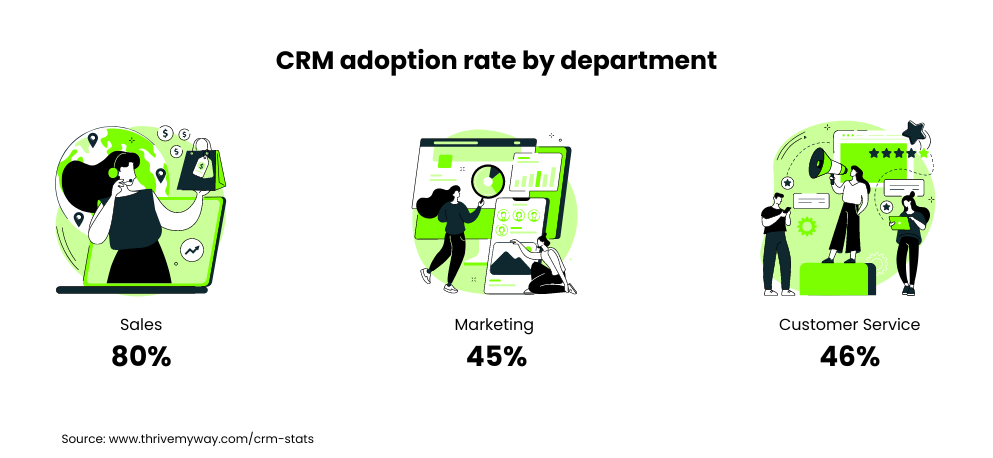
Furthermore, CRM is instrumental in fostering customer loyalty, a key to long-term success. By maintaining meaningful communication, providing exceptional customer service, and timely follow-ups, businesses can cultivate lasting loyalty and turn customers into brand advocates.
As the market becomes more competitive, real estate CRM has emerged as a critical tool that empowers companies to navigate the customer-centric landscape with confidence and establish a strong market presence.
II. The Challenge of CRM Implementation
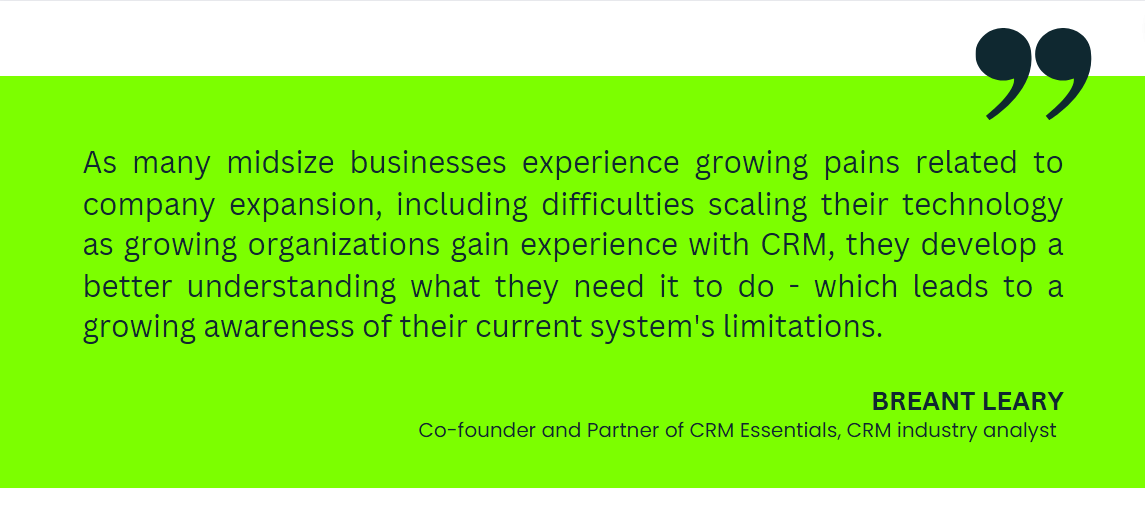
While the benefits of CRM are undeniable, the path to successful implementation is not without hurdles. Many companies encounter obstacles that can hinder the full utilisation of their CRM investment.
These implementation issues include:
While traditional CRMs may require extensive customization and configuration, leading to delayed launches and missed opportunities.
It is astonishing that 43% of CRM users utilise less than half of the features available in their implemented CRM system.
This raises concerns about the efficiency of the setup process and the need for businesses to fully capitalise on the functionalities at their disposal.
Integrating the CRM with existing systems and databases can be a complex process, leading to data synchronisation problems and hampering a seamless flow of information.
The lack of integration can hinder the holistic view of customer data, reducing the effectiveness of the CRM in driving customer-centric strategies.
The comprehensive functionalities of CRMs may overwhelm employees, requiring significant training and adjustment periods.
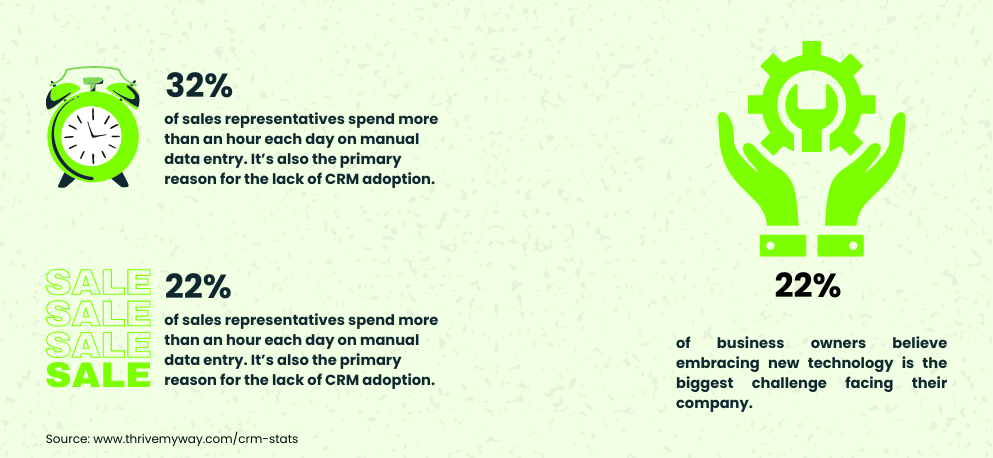
According to Finances Online, only 22% of sales professionals are still unsure about what a CRM is.
This highlights the necessity for businesses to invest in comprehensive training programs to ensure that their teams are equipped to leverage the CRM's capabilities effectively.
Lengthy implementation timelines can lead to unexpected budget overruns, straining the financial resources of the company. With the growing need for swift and efficient implementation, businesses must find ways to streamline the process without compromising on the CRM's effectiveness.
III. PropFlo: The ICLM Solution For Real Estate
The real estate industry in India has been witnessing remarkable growth over the past few years. Factors such as rapid urbanization, increasing disposable income, and a growing population have contributed to a surge in demand for residential and commercial properties.
The thriving real estate industry has spurred substantial growth for property management companies. They are no longer restricted to major cities but are expanding into tier 2 and tier 3 cities, seizing the vast opportunities for growth.
With this expansion, the volume of customer data, property listings, and transactions has significantly increased, requiring robust and scalable CRM solutions to handle the ever-growing demands.
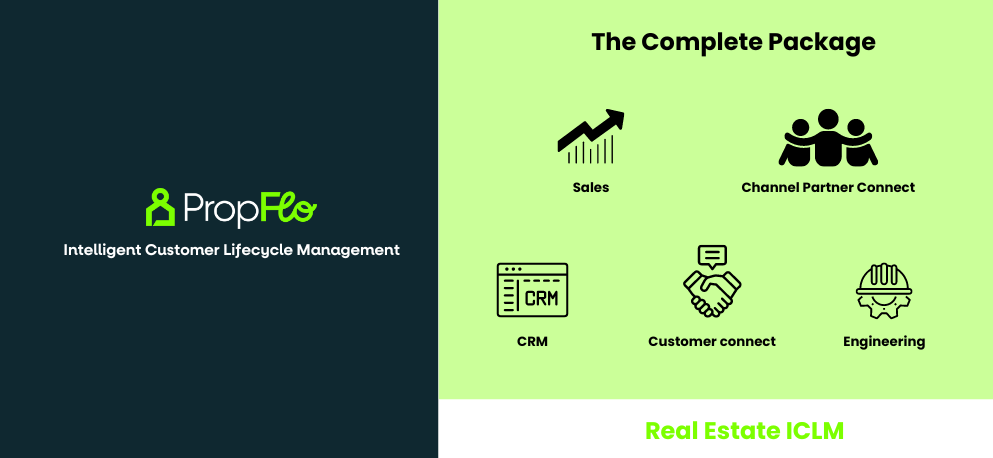
Here's how PropFlo's Intelligent Customer Lifecycle Management (ICLM) features overcome the common pitfalls of traditional CRMs used by real estate management companies:
PropFlo offers an intuitive and user-friendly interface, simplifying the setup process and allowing real estate companies to get started quickly. With pre-configured templates and easy-to-follow steps, businesses can swiftly deploy PropFlo and begin harnessing its power without the complexities associated with traditional CRM setups.
Integrating existing real estate systems with PropFlo becomes a breeze, ensuring a smooth flow of data and eliminating data synchronisation issues. PropFlo seamlessly connects with various real estate platforms, consolidating valuable customer information and empowering businesses with a comprehensive view of their clientele.
PropFlo understands that change can be daunting, which is why it offers personalised onboarding and training support. By tailoring the training process to individual needs, PropFlo minimises resistance to change and accelerates user adoption, enabling businesses to leverage its full potential from the outset.
PropFlo's efficient implementation process minimises resources and time, making it a cost-effective solution for real estate companies.
Studies show that a good CRM gives a return of $45 for every $1 spent, offering a compelling value proposition for businesses seeking to maximise their CRM investment.
IV. Transforming Real Estate Customer Lifecycle Management with PropFlo
In the competitive real estate market, PropFlo empowers companies to take customer lifecycle management to the next level:
PropFlo enables real estate businesses to deeply understand customer preferences and behaviour. Armed with this knowledge, businesses can provide tailor-made interactions, personalised recommendations, and exceptional customer service, thereby increasing customer satisfaction and loyalty.
PropFlo's AI powered CRM and machine learning capabilities provide valuable data-driven insights, facilitating informed decision-making and strategic planning. By analysing customer trends and market dynamics, businesses can make well-informed choices that drive growth and set them apart from the competition.
By automating repetitive tasks and streamlining workflows, PropFlo liberates real estate companies from manual administrative burdens. This newfound efficiency enables businesses to focus on core operations, nurture leads, and create meaningful connections with customers, ultimately propelling them towards sustainable growth.
Bottom line
CRM systems have undoubtedly become indispensable tools for businesses operating in various sectors. These powerful platforms act as the backbone of customer relationship management, enabling companies to efficiently organize and manage customer interactions, sales processes, and marketing campaigns. However, despite the numerous benefits they offer, successful CRM implementation can often prove to be a significant challenge for organizations.
PropFlo, as an ICLM software, addresses these implementation issues, providing a seamless, user-friendly, and cost-effective solution. PropFlo makes CRM implementation effortless, revolutionizing customer experiences, harnessing data insights, and maximizing efficiency in real estate customer lifecycle management.
Our Intelligent Customer Lifecycle Management (ICLM) solution is tailor-made to meet the unique demands of the dynamic real estate sector.
Experience the power of PropFlo with its intuitive setup, seamless integrations, personalized training, and impressive ROI potential.
Get started with PropFlo today!
Related Articles
FAQs
1.What are the benefits and challenges of CRM?
Although manual data input might be laborious, CRM is a vital tool that helps organise client data. Today's solutions, however, are more advanced and employ AI, provide suggestions, and other features that improve marketing and streamline operations.
2.What are the objectives of CRM?
A CRM system's primary goal is to enhance the customer experience. The most reliable strategy to achieve success for your organisation is to carry out this goal. All other objectives will complement your CRM's primary purpose of increased customer satisfaction.
3.What is the impact of a CRM system?
CRM consolidates all of the customer-related data in one easy-to-access area, allowing your business to make better informed decisions regarding them. CRM may be used to track and manage support issues and cases for customer care employees.
4.Why is CRM important to implementation?
A CRM system boosts the quantity of leads coming in and speeds up the process of your marketing team finding new clients by smartly storing and maintaining your customers' information. It helps your sales staff close more transactions more quickly. Furthermore, it improves customer service.