

CRM has been a backbone for every business for years now. These systems have soon become essential tools for managing all kinds of operations for a business. They help in managing customer data, improving sales and offering exceptional customer service. With the ever-growing need for personalized services, CRM systems merged with new AI technologies to serve the real estate industry.
Salesforce is one of the most well-known CRM platforms. But it’s very important that CRM software should fit every business. It is quite impossible for a crm to be suitable for any kind of business. For example, a real estate business would require a CRM that is specifically designed for real estate business needs. In this blog, we’ll dive into what Salesforce CRM offers and also explore some top alternatives and competitors in 2025
What is a CRM?
A CRM (Customer Relationship Management) system is a software technology used by businesses to manage customer lifecycles from inquiry to the final step. CRMs help in managing the relationships with customers, manage processes and improving profitability. In real estate, CRMs are crucial in managing leads, automating sales workflows, tracking deals, and improving communication between agents and clients.
Salesforce CRM: An Overview
Salesforce, one of the most popular CRM systems around the world, provides a set of cloud-based tools to help the business in managing operations. They help in managing sales, marketing, leads and customer service. This software provides a 360-degree view of customer interactions.
Key Features of Salesforce CRM:
-
Cloud-Based: Salesforce operates entirely on the cloud, making it easily accessible from any device.
-
Customizable Dashboards: Provides dashboards that can be personalized to suit your own business needs.
-
Lead and Opportunity Management: Lead capturing is done within the system and also provides leads nurturing.
-
Marketing Automation: salesforce automates the whole marketing process with tools like pardot and marketing cloud.
-
Advanced Analytics: Einstein AI, an AI tool, offers insights into customer activity and sales for analytics.
Drawbacks of Salesforce CRM:
-
Complex Setup: Salesforce is not beginner-friendly and also can be complex to set up.
-
Expensive: While offering a good set of features, its pricing is quite high, especially for small businesses or startups.
-
Overwhelming Features: For businesses that only need basic CRM functionalities, Salesforce’s vast range of tools can feel overwhelming and unnecessary.
-
Customization Requires Expertise: While Salesforce is highly customizable, the level of customization required can lead to dependency on technical support or experts.
What the Top reasons to switch from Salesforce CRM
Salesforce, despite offering great features and advancements, We think it lacks in some areas such as:
-
High cost for customization and takes too much time to get new features.
-
Premium product positioning for Enterprise
-
Add-ons at additional cost
-
Not dedicated to any particular industry and serves clients across multiple industries
-
Needs professional expertise to learn and handle
Top 5 Alternatives to Salesforce CRM
While Salesforce is a leading CRM, there are several other platforms that offer powerful features tailored to real estate businesses. Let’s take a look at five top Salesforce alternatives that can help you manage client relationships and streamline your real estate processes.
1. Propflo CRM
Introduction: Propflo is a top-rated, salesforce competitor in the real estate business. PropFlo is an all-in-one real estate crm that is designed specifically for real estate professionals. Which covers all the aspects of real estate management and provides a better crm alternative to developers with new tech and AI-powered features with exceptional customer support where many enterprise-grade companies lack it.
.png)
Features:
-
Lead Management: manages the leads that are captured through various platforms, and follow-ups are automated.
-
Property Management: Properties are managed, tracks the units and handles all the inquiries in one platform itself.
-
Client Communication: PropFlo provides tools to chat, email and also call clients.
-
Real-Time Notifications: Get instant updates on customer activity, ensuring timely responses.
-
Customizable Reports: Create detailed reports to analyze performance and forecast sales trends.
.png)
Why It’s a Great Alternative: PropFlo is the best real estate crm specially designed for only one industry, i.e., real estate. PropFlo CRM offers great features along with user-friendly and best customer support, which many businesses are lagging in 2025. PropFlo knows exactly what real estate professionals need and provides the solution from the lead enquiry to possession, in which most of the things are automated with AI-powered features all within PropFlo CRM.
Also read blog on: Artificial Intelligence in Real Estate Industry
2. HubSpot CRM
Introduction: HubSpot CRM offers powerful marketing tools and comes with a user-friendly interface. This is perfect for small to medium-sized businesses that are looking for an easy-to-use CRM that’s easy to implement.
Features:
-
Lead Tracking: HubSpot tracks and manages the leads with ease, from inquiry to conversion.
-
Email Marketing: Emails can be personalized and automated for campaigns to engage with leads and clients.
-
Sales Pipeline: The Sales pipeline can be entirely visualized, and you can check where the lead stands.
-
Free Plan: HubSpot CRM offers a free version with essential features, allowing businesses to try it before committing.
Why It’s a Great Alternative: HubSpot is a top alternative for small businesses looking for an affordable CRM with marketing automation tools. The free version is a great starting point for those looking to grow.
3. Zoho CRM
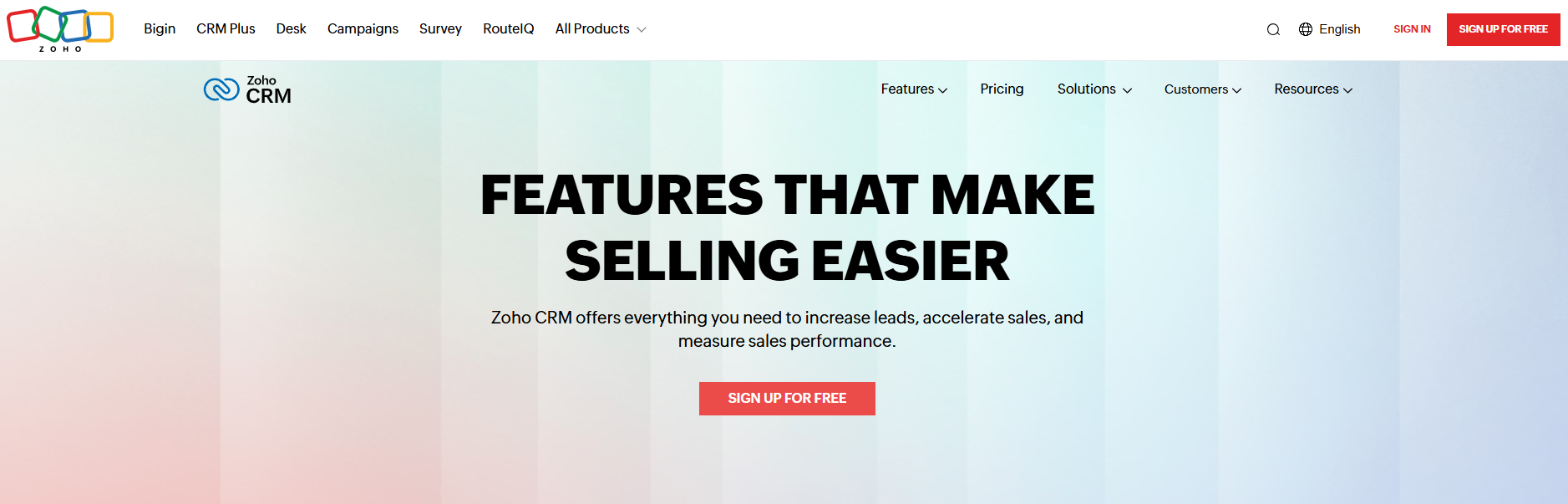
Introduction: Zoho CRM is an all-in-one CRM tool that’s known for its flexibility and customization. It offers a variety of features to support sales, marketing, and customer support for businesses of all sizes.
Features:
-
Sales Automation: Automates repetitive tasks, allowing sales teams to focus on closing deals.
-
Omnichannel Communication: Communicate with customers via email, chat, social media, and more.
-
Customizable Workflows: Tailor workflows to suit your business processes and needs.
-
Analytics and Reports: Advanced analytics to track sales performance and customer engagement.
-
Integration with Other Zoho Apps: Seamless integration with other Zoho tools for accounting, email campaigns, and more.
Why It’s a Great Alternative: Zoho CRM offers powerful features at a competitive price. Its customization options make it a strong alternative to Salesforce, particularly for businesses looking for flexibility.
4. Pipedrive CRM
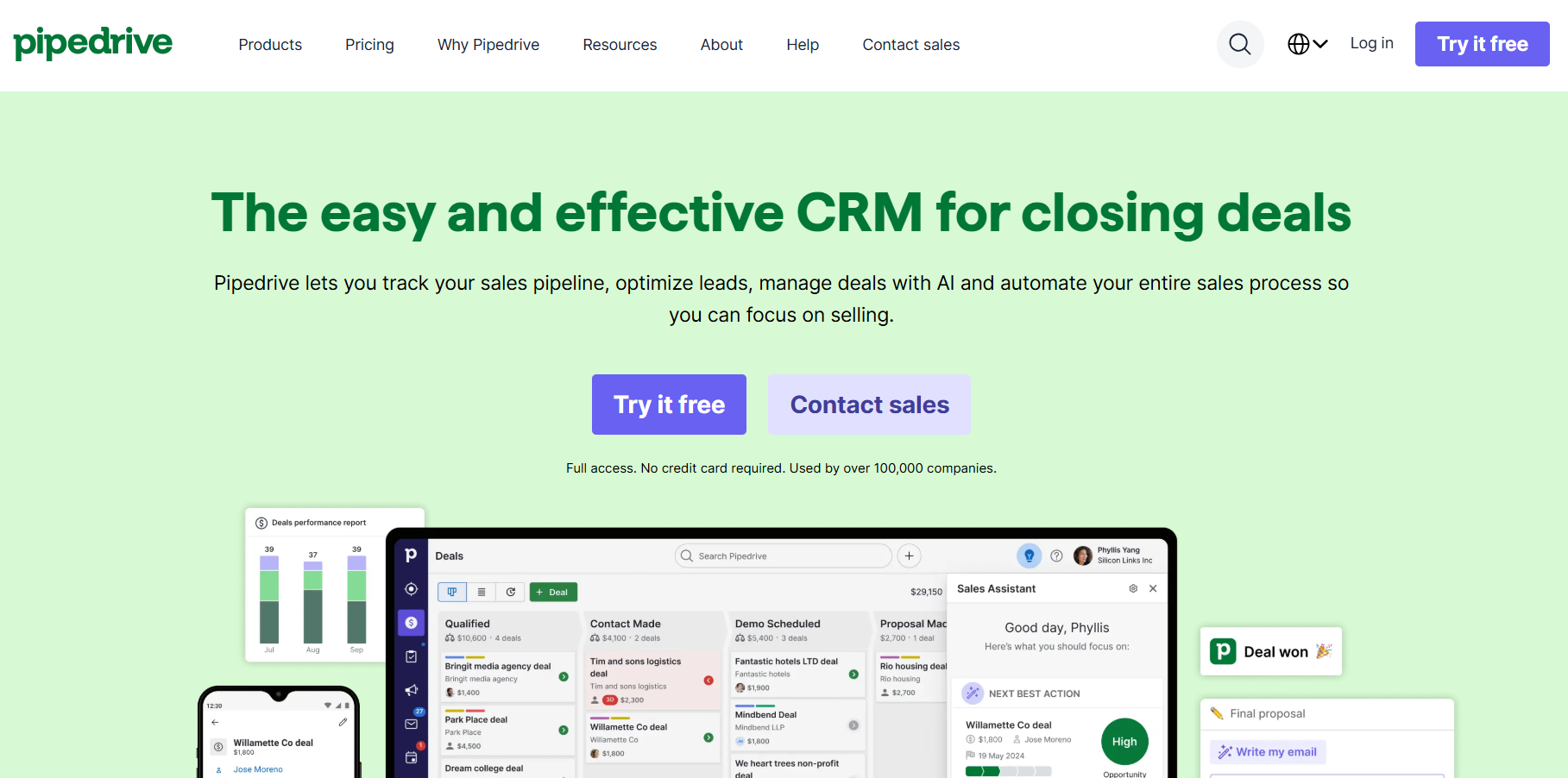
Introduction: Pipedrive is a sales-focused CRM that emphasizes ease of use and visual pipeline management. It’s perfect for real estate businesses that need to manage their sales pipeline efficiently.
Features:
-
Visual Sales Pipeline: Organize deals with a simple drag-and-drop interface.
-
Activity and Task Management: Automate tasks and schedule follow-up reminders.
-
Email Integration: Sync your email account with Pipedrive to track conversations with leads.
-
Customizable Fields: Adapt Pipedrive’s layout and fields to fit your unique real estate sales process.
-
Sales Reporting: Track progress with powerful reporting tools that provide detailed insights.
Why It’s a Great Alternative: Pipedrive is ideal for focusing on managing leads and deals in a proper, visual way. It’s easy to use and primarily focuses on the sales part.
5. Microsoft Dynamics 365
Introduction: Microsoft Dynamics 365 is an enterprise-grade CRM and ERP software that offers a complete suite of business management tools. It’s best for large organizations looking for advanced features and scalability.
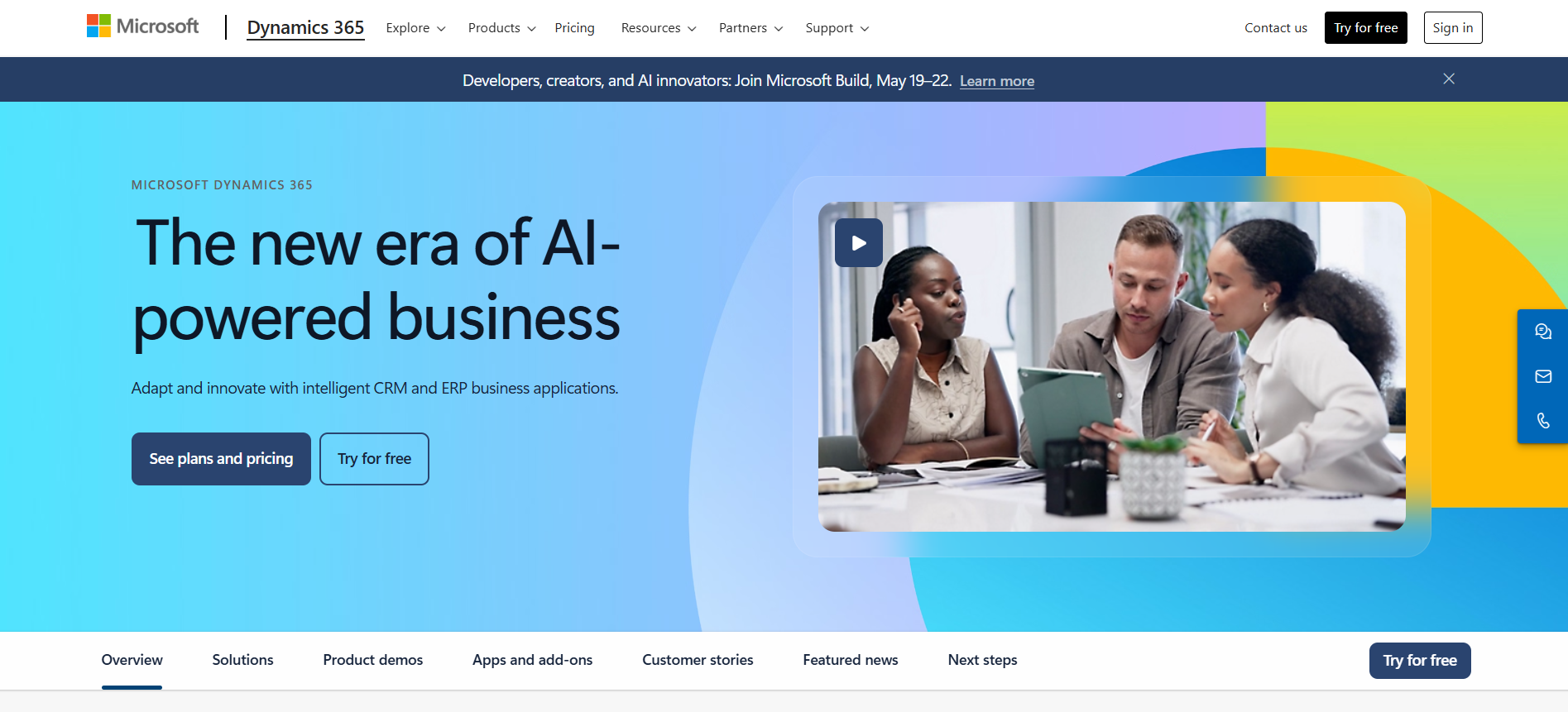
Features:
-
Sales and Marketing Integration: This combines both sales data and marketing data and creates customer profiles based on that.
-
Customer Insights: This provides AI-driven insights through which it helps in predicting customer behavior and sales trends.
-
Field Service Management: It can track on-site issues and offer good customer service.
-
Custom Workflows: It manages the workflows and also the process stages according to your business.
-
Deep Integration with Microsoft Tools: It integrates easily with other Microsoft tools like Office 365, Teams and Azure.
Why It’s a Great Alternative: Dynamics 365 is perfect for large enterprises that require extensive customization and integration with other Microsoft products. It provides an all-in-one solution for CRM, ERP, and customer service.
Also Read: Difference between CRM and ERP
Conclusion
Salesforce is no doubt a powerful CRM, but it’s not the only option available in the market. One needs to explore all the software and solution systems before deciding and choosing one for their business. Before selecting a CRM, it is important to also check if that software is suitable and can be customizable to your business. Not every CRM can be scalable enough; it is also important to choose according to the industry you are in. Whether you are a small real estate startup, a growing business, or a large enterprise, platforms like Propflo, HubSpot CRM, Zoho CRM, Pipedrive, and Microsoft Dynamics 365 offer robust features and flexible pricing models to help you manage customer relationships effectively. Consider your specific requirements as well as needs and then choose a CRM platform that best aligns with your business.