

Developers have to deal with an endless number of projects, buyer interactions, channel partners, site visits, and lead pipelines constantly in the aggressively competitive real estate industry. Spreadsheets, manual follow-ups, and scattered communication may work for short periods, but a real estate CRM works much better when building a real estate business.
Developer-focused CRM systems can do much more than just help manage contacts. It can monitor the performance of projects, coordinate broker networks, automate the lead nurturing process, and enhance departmental communication. Let us discuss how a CRM can significantly enhance your real estate development business.
What is a Real Estate Developer CRM?
One of the digital tools to organize and streamline a developer's pre-sales and post-sales activities is a real estate developer CRM. Such platforms are developed with real estate logic, i.e., unit inventory, project stages, buyer journey, and broker collaboration, unlike general CRMs. A real estate CRM brings all the activities together in one place, ranging from monitoring reservations and payment schedules to receiving leads from portals like Facebook or 99acres.
Why Developers Need a CRM Today
The real estate business is highly competitive—and developers are always managing multiple projects, buyer interactions, channel partners, site visits, and lead pipelines. Spreadsheets, manual follow-ups, and fragmented communication might get the job done in the short term, but growing a real estate business requires something much more efficient: a real estate CRM.
A CRM specifically for developers does a lot more than hold contacts. It has the ability to automate lead development, manage broker networks, measure project performance, and facilitate better interdepartmental communication. Let's explore the impact of working with a CRM on your real estate development business.
Centralized Lead Management
Leads pour in from various sources—portals, websites, walk-ins, referrals, and social media. A CRM captures all leads automatically, assigns them immediately, and follows up until closure. No more missed follow-ups or unresponsive leads.
Faster Sales Closures
With lead routing automation, brochure distribution, and site visit planning, the sales process gets really short. CRMs also enable sales teams to realize buyer intent so they can prioritize hot leads and close faster.
Real-Time Inventory View
Real estate CRMs maintain a live database of available units, pricing, offers, and configurations. Sales reps no longer need to check with multiple people or use outdated Excel sheets to know what’s available.
Better Channel Partner Coordination
A CRM offers dedicated modules for onboarding and managing channel partners. Developers can assign leads, track CP performance, avoid duplicate leads, and automate commission payouts—making broker relationships more efficient.
Improved Customer Experience
From auto-generated emails to document sharing and payment follow-ups, CRMs provide a smoother experience to buyers. Customers stay informed and engaged throughout the journey—boosting trust and brand value.
Insights & Analytics
Through dashboards and reports, developers are able to monitor which campaigns perform most effectively, which sales reps perform best, and which projects are behind. Data-driven decisions substitute guesswork and enhance ROI.
How Is AI Being Used in Real Estate Today?
Artificial Intelligence is changing the way the real estate industry works—bringing automation, personalization, and data-driven decisions to the forefront. From smart lead scoring to predictive pricing and virtual property tours, AI helps realtors and developers work faster and better. It reduces manual work, improves customer engagement, and boosts sales efficiency. AI-powered CRMs, AI Agents, chatbots, and fraud protection software are now essentials in today's real estate. For small agents or large developers, AI tools make scaling and closing operations easier. Embracing AI today can be the difference between mere survival and actually thriving in the market..png)
Bonus Benefits Developers Often Miss
-
WhatsApp & Email Automation: Auto-send brochures, follow-ups, and reminders on channels your customers prefer.
-
CRM + ERP Integration: Sync data across departments (sales, marketing, finance) to reduce silos.
-
Role-Based Access: Give access to the right people—sales teams see leads, finance teams manage payments, and admins track everything.
Use Case: A Sample Workflow
Lead captured from Facebook ad → Automatically captured in CRM → Allocated to sales agent → Brochure automatically sent → Site visit arranged → Follow-up call reminder setup → Unit booked → Documents uploaded → Payment reminders sent → Handover completed.
All this in one CRM—without having to switch tools or track updates manually.
What to Look For in a Developer CRM
-
Easy-to-use interface
-
Mobile access for on-site teams
-
Lead capture from all sources and real estate portals
-
Post-sales and inventory modules integrated
-
Channel partner dashboard
-
Real-time reporting & analytics
We have compiled list of 5 Best Marketing Automation softwares in 2025
Here’s Why PropFlo CRM is becoming a Top Choice for Real Estate Developers
A CRM system created specifically for real estate developers, PropFlo CRM provides an all-in-one solution to cover everything from lead inquiry to possession with features like leads and contact management, full-funnel marketing automation, AI features in real estate, email automation and built-in WhatsApp. Post-sales management, channel partners, inventory management, etc.
At the competitive CRM pricing, PropFlo provides the best usability, customer support, knowledge of the real estate industry language, excellent integration capabilities, and knowledge of exactly what real estate professionals need.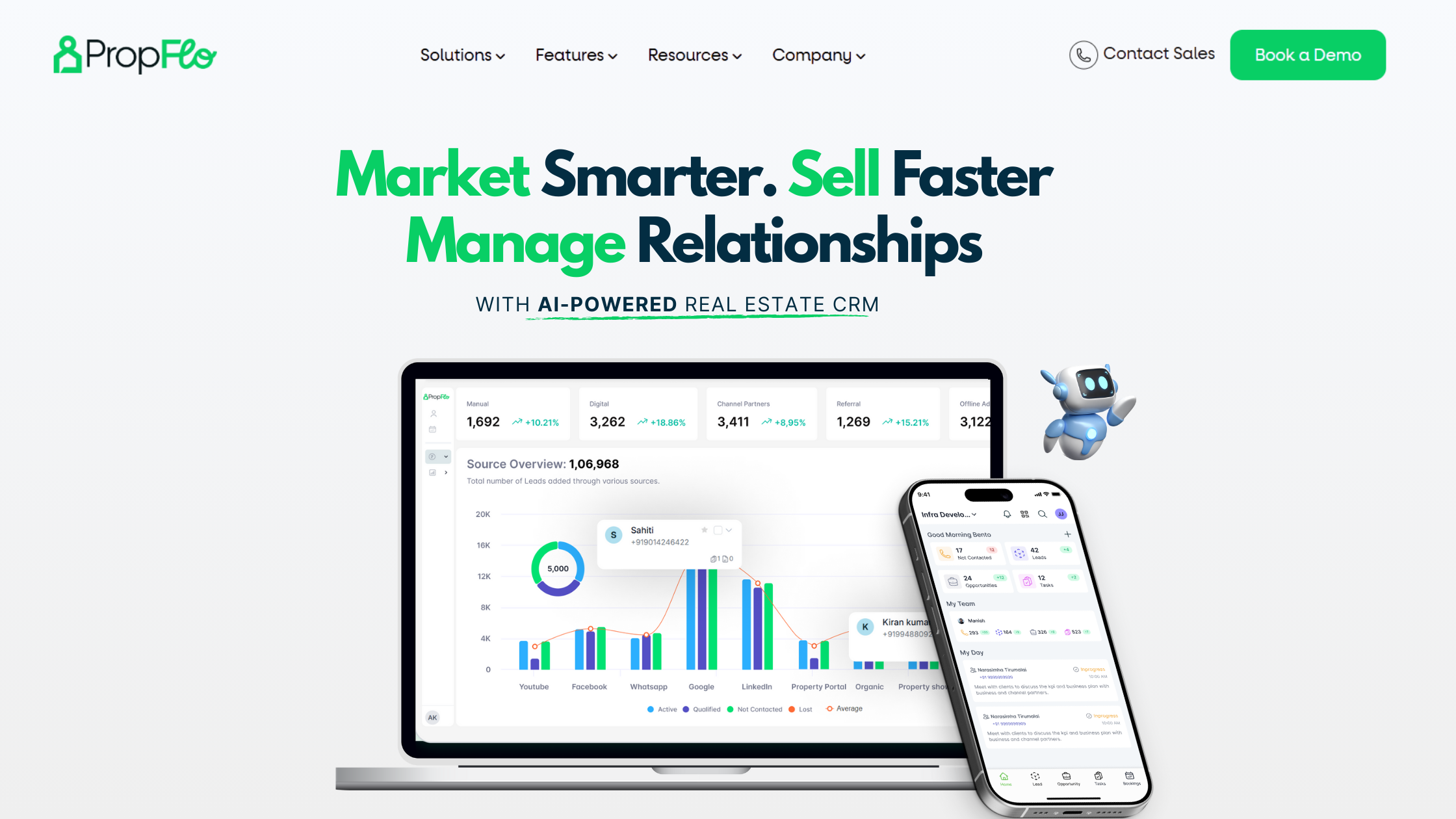
Key Features:
-
Leads and Sales Management: Propflo manages every lead after capturing it from different platforms and assigns the lead to salespeople without any conflict or duplication and assigns employee follow-up calls and reminders to each lead.
-
AI Features: Inbuilt AI features for real estate, such as 24x7 AI Sales assistant, AI content generator , AI lead scoring, etc.
-
Property Management: Properties are handled, monitors the units and manages all the queries in one platform itself.
-
Marketing Automation: Sending automated follow-ups, personalized messages and mails within the system and making calls between salesperson and customer within minutes of lead generation and Also provides inbuilt whatsapp to make the communication easier.
-
Mobile Application: A cloud-based CRM mobile app for your team to remotely access from the field.
-
Post sales management: Manage the entire post-sales process, such as document generation, payment management, post sales follow-up task automation, and milestone tracking, and give the best customer experience to your clients even after booking.
-
Customer Interaction Management and Tracking: Track every stage of an interaction, from initial inquiry to possession, and communicate with your customers for post-sales follow-ups and payment updates and reminders over WhatsApp.
PropFlo is in the top 3 easy-to-use real estate CRMs by G2 globally. The PropFlo CRM comes with an all-in-one marketing suite (email, built-in WhatsApp, IVR Telephony and AI features). It is a solid substitute for real estate companies searching for a specialized CRM because of its real estate-focused AI-driven capabilities, ease of use and customer support.
Conclusion: A CRM is Not a Luxury - It’s a Necessity
In the current real estate environment, speed, efficiency, and customer experience are what make or break success. A CRM assists developers in imposing order on chaos, eliminating manual errors, and scaling operations with confidence. Whether you're managing 50 units or 500 inventory, the appropriate CRM enables you to sell smarter, not harder. It's time to end the spreadsheet dependence and begin creating a system that works for you. Discover the best CRM solutions and locate one specific to your company's development.