


With today's competitive real estate landscape, differentiating from the pack and reaching the correct audience is more crucial than ever. Lead segmentation is one of the most efficient ways to accomplish this. So, what is lead segmentation, and how can it assist you in creating better and more targeted real estate marketing campaigns?
Understanding Lead Segmentation
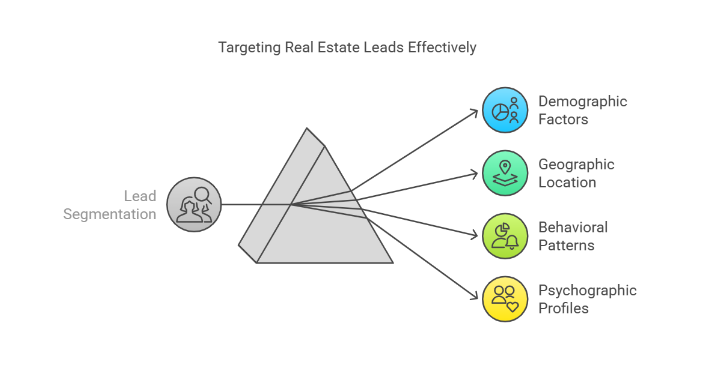
Lead segmentation is the action of dividing up prospective customers (or "leads") into targeted groups according to certain criteria. These criteria might be demographic, geographic, behavioral, or psychographic characteristics. Essentially, lead segmentation assists in dividing a mass audience into subsets that are easy to work with, thus it is simple to customize marketing communications, promotions, and tactics to appeal to every subset.
What is Lead Segmentation? and Why Does It Matter in Real Estate Marketing?
Real estate is a massive business with an excellent combination of buyers, sellers, investors, and renters, all with their own unique needs and desires. There is no more place for one-size-fits-all marketing. Lead segmentation enables you to:
Personalize Communication: Individuals are more inclined to respond to information and offers that are tailored to their needs. Segmentation enables you to tailor messages to different groups, hence making them more probable to convert.
Maximize Resources: Rather than spreading your message using a shotgun approach and hoping for the best, segmentation allows you to focus your marketing on the most likely prospects. This helps in reducing wasted resources, whether it’s time, money, or effort.
Improve Lead Nurturing: By segmenting leads into smaller groups, you can nurture them more effectively through the buyer’s journey, providing relevant content and offers based on where they are in the process.
Increase Conversion Rates: When the marketing messages are directed and respond to a lead's exact desires and requirements, they are more likely to act, whether it is by contacting an agent, scheduling an inspection for viewing, or making an offer on a property.
Types of Lead Segmentation in Real Estate
Real estate agents have several segmentation techniques available to them to group leads. Some of these methods are:
-
Demographic segmentation: This involves attributes such as age, income, occupation, household size, and others. For instance, a newlywed couple purchasing their first house might be interested in low-priced starter homes, whereas a retiree would be interested in downsizing or in a low-maintenance home.
-
Geographic Segmentation: Real estate is location-sensitive. Geographical segmentation may identify the possible customers or sellers based on certain cities, neighborhoods, or even parts of a city. Targeting clients for homes close to a new school or a new popular park, for example, would be a good idea.
-
Behavioral Segmentation: This is concentrated on the conduct of leads, i.e., how they respond to your site, their action towards past advertisements, or if they are even interested in any particular types of properties. Whether leads respond and engage with content you send could help you make your follow-up strategy more individualized.
-
Psychographic Segmentation: This involves segmenting leads based on their interests, values, lifestyle, and attitudes. For example, some buyers might be motivated by eco-friendly features or a sense of community, while others may prioritize investment potential and luxury amenities.
-
Stage in the Buyer’s Journey: Not all leads are at the same point in their decision-making process. There will be some just browsing, some who are really searching to buy. Segmentation by stage within the journey (e.g., awareness, consideration, decision) allows you to adapt your message and send appropriate messages at appropriate times.
How to Implement Lead Segmentation in Real Estate Marketing
-
Collect Data: Step one is collecting data on your leads.This may be done by using website forms, social media interaction, email lists, and CRM programs. The more you collect, the more effectively you can segment your leads.
-
Analyze and categorize: Once sufficient CRM customer data is obtained, analyze the data to establish patterns or common characteristics. Segregate the leads based on the relevant segmentation factors, for example, location, behavior, or buying process stage.
-
Build Segmented Campaigns: Having segmented your leads, you can now build segmented marketing campaigns that speak to each segment as a unique entity. It could be with customized email, social media campaigns, or web content. Message, promote, and image-align to the need and desire of each segment.
-
Track and Refine: Never a one-and-done in real estate marketing. Monitor campaign performance, such as conversion rates and engagement. Utilize this to continually fine-tune your segmentation strategy for improved performance over time.
Examples of Targeted Real Estate Campaigns through Segmentation
First-Time Buyers: These are leads that potentially require more training content and handholding in the home purchasing process. An offer of a free eBook or webinar titled "How to Buy Your First Home" can create and nurture these leads.
Luxury Property Buyers: Luxury buyers often have different needs and desires. A high-end VIP experience, such as priority tours or tailored listings, will make your campaigns more attractive to them.
Investors: Real estate investors are searching for opportunities with good ROI potential. Marketing to this segment with news about investment opportunities, rental returns, and predictions about future markets can stimulate better response.
Sellers: Sellers who want to sell their homes might require a different message than buyers. Target them with an offer that explains the advantages of using an agent, trends in the market, and how to stage their home for sale.
Conclusion
Success in the cutthroat real estate industry is not just about creating leads, but about creating the correct leads. Lead segmentation enables you to provide highly targeted marketing initiatives that resonate with each segment. Real estate professionals can improve interaction, increase conversion rates, and maximize return on investment with the appropriate segmentation techniques. And therefore, regardless of whether you need to target first-time buyers, experienced investors, or luxury house consumers, lead segmentation is how you develop targeted, effective campaigns.