

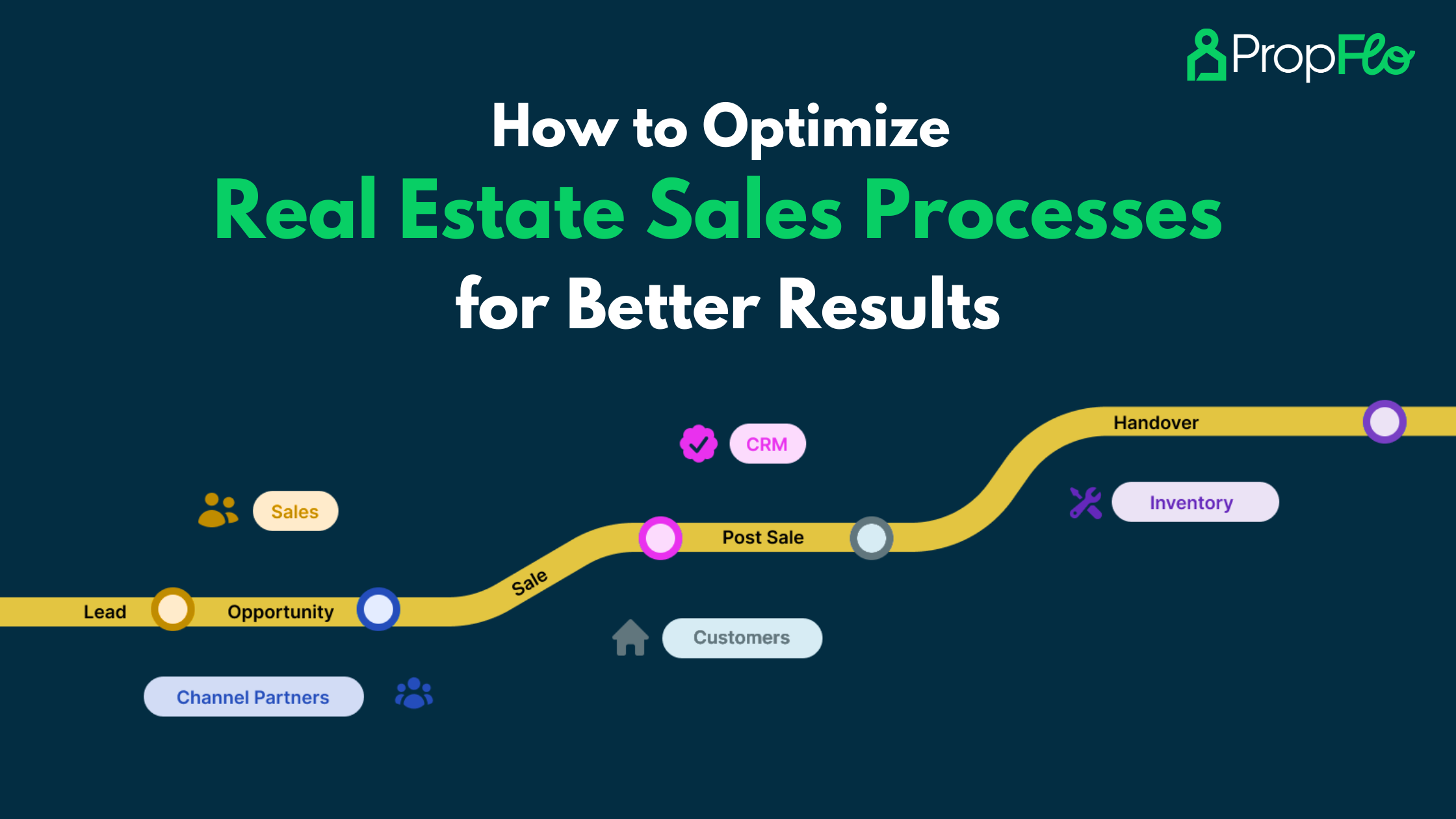
While selling a property can appear challenging, having the right strategy in place makes the journey far more straightforward and worthwhile. According to a Zillow Group case study, agents who implemented a structured sales pipeline recorded a 30% increase in closed deals within 12 months.
From lead generation to closing and even beyond, a well-optimized sales process enables faster conversions, more predictable outcomes, and elevated client satisfaction.
This blog explores the blueprint for optimizing your real estate sales workflow, including why each stage matters, which metrics to monitor, and how modern tools and strategies can transform your operations from disjointed to exceptional.
Understanding the Real Estate Sales Workflow
In real estate, success is rarely accidental. It’s the result of a clear, repeatable sales process that guides prospects from the first point of contact to closing and beyond. Without a defined workflow, opportunities can be missed, leads can go cold, and client experiences can become inconsistent.
A typical real estate sales process involves multiple touchpoints, from generating leads to closing deals. For professionals aiming to build an entire real estate sales process that’s both scalable and repeatable, it’s essential to understand how each stage works and connects with the next.
A real estate sales process typically includes six key stages:
Prospecting → Listing → Showing → Negotiation → Closing → Post-Sale Follow-Up.
Why Having a Defined Workflow Matters
-
Clarity for the Team
A well-documented process ensures that every team member knows exactly what needs to be done at each stage, reducing confusion and miscommunication. -
Better Client Experience
When steps are consistent, whether it’s sending timely updates or following up after showings, clients feel valued and informed. This not only builds trust but also increases the likelihood of referrals. -
Improved Conversion Rates
By tracking each stage, you can identify where leads drop off and make data-driven improvements to keep deals moving forward.
Common Bottlenecks in Real Estate Sales
-
Lead Leakage: Leads are generated but not followed up promptly, causing potential buyers or sellers to lose interest.
-
Disorganised Data: Without a central system, client and property details may be scattered across emails, spreadsheets, and notes.
-
Slow Turnaround: Delays in property presentation, documentation, or communication can prompt clients to turn to faster-moving competitors.
The Role of Systems and Tools
Modern CRMs and automation tools play a crucial role in streamlining workflows. They help manage leads, schedule follow-ups, send property updates, and track deal progress all in one place. This not only increases efficiency but also ensures that no lead or task slips through the cracks.
A strong, structured sales workflow is the foundation for achieving higher conversions, fostering better client relationships, and driving sustainable growth. In the sections ahead, we’ll explore how to optimise each stage of the process for maximum results.
Step-by-Step Guide to Optimizing Each Stage
A real estate sale is rarely a single conversation—it’s a series of interactions, decisions, and follow-ups that can span weeks or even months. Optimising each stage of this journey ensures your team works smarter, clients have a smoother experience, and deals close faster.
Let’s break down how you can optimize every stage of the workflow. Think of this as a real estate sales walkthrough, a practical guide that shows how every interaction, from lead generation to follow-up, contributes to smoother closings and stronger client relationships.
Stage 1: Prospecting & Lead Generation
Why it matters: If you start with poor-quality leads, every stage after will suffer. A well-defined approach here sets the tone for the entire funnel.
How to optimise:
-
Identify your Ideal Customer Profile (ICP): Use data from past successful deals to map out your best buyers and sellers, including their budget range, preferred locations, and typical transaction timelines.
-
Diversify lead sources: Don’t rely on a single platform. Use a mix of digital channels (SEO, paid ads, social media, property portals) and offline tactics (networking events, referrals, local partnerships).
-
Implement automated lead capture: Utilize website forms, chatbots, and integrated landing pages to directly feed leads into your CRM, eliminating manual entry errors.
-
Qualify early: Use lead scoring rules in your CRM to prioritise hot leads based on engagement signals like website visits, ad clicks, and inquiry frequency.
Stage 2: Preparing & Promoting Listings
Why it matters: First impressions influence whether a property gets shortlisted or ignored. Poor presentation can kill interest before it starts.
How to optimise:
-
Professional visuals: Invest in high-resolution photos, drone shots, and 3D walkthroughs to enhance your presentation. Buyers make snap judgments based on images, especially in online listings.
-
Story-driven descriptions: Instead of simply listing features (“3 BHK, 1,200 sq ft”), highlight lifestyle benefits (“Spacious 3 BHK with natural light, ideal for growing families”).
-
Smart pricing: Utilize market analytics and automated valuation models (AVMs) to set competitive prices without undervaluing the property.
-
Multi-platform exposure: Syndicate listings across portals, social media, your website, and even WhatsApp broadcasts for maximum visibility.
Stage 3: Showings & Client Engagement
Why it matters: This is where interest can deepen—or disappear. A poor showing experience can undo weeks of lead nurturing.
How to optimise:
-
Flexible scheduling: Offer evening or weekend slots to accommodate working buyers. For remote clients, provide virtual tours.
-
Pre-showing engagement: Send digital brochures, video teasers, and local area highlights before the visit to build anticipation.
-
Personalised approach: Adjust the tour and your pitch based on what you already know about the client’s preferences.
-
Structured feedback collection: After each showing, ask clients for their impressions and log responses in your CRM. This informs future recommendations.
Stage 4: Negotiation & Offer Management
Why it matters: The negotiation stage can make or break a deal. Poor preparation can lead to missed opportunities or less favourable terms.
How to optimise:
-
Prepare with data: Arm yourself with market comps, property reports, and client priorities before discussions begin.
-
Clear communication: Be prompt and transparent in responses to maintain trust with both parties.
-
Leverage technology: Use your CRM to track offer history, terms discussed, and any concessions made to avoid miscommunication.
-
Balance firmness with flexibility: Protect your client’s interests while maintaining collaborative negotiations.
Stage 5: Closing the Deal
Why it matters: The final stage often involves multiple stakeholders: lawyers, lenders, and agents, making it prone to delays if not well-managed.
How to optimise:
-
Detailed closing checklist: Map out every required document, signature, and approval to avoid last-minute surprises.
-
Streamline communication: Keep all parties informed via group chats or shared platforms.
-
Go digital where possible: Use e-signatures, cloud storage, and payment gateways to speed up processing.
Stage 6: Post-Sale Follow-Up & Relationship Building
Why it matters: A satisfied client can turn into a repeat customer or your best source of referrals.
How to optimise:
-
Express gratitude: A personalised thank-you email, handwritten card, or thoughtful gift can leave a lasting impression.
-
Ongoing communication: Share property maintenance tips, local market updates, and exclusive event invitations.
-
Referral program: Offer incentives for clients who refer friends or family.
-
Track in CRM: Schedule automated reminders for periodic check-ins—6 months, 1 year, anniversaries.
Understanding Real Estate Sales and Post-Sales Process
The journey in real estate doesn’t end when a deal is closed. In fact, the most successful realtors know that closing is just the midpoint of a longer relationship. Understanding both real estate sales processes and the post-sales journey is what separates average brokers from high-performing ones.
At its core, the sales process covers everything from initial lead capture to property showings, negotiations, and closing. But to build an entire real estate sales process that truly delivers value, you must also factor in what happens after the paperwork is signed. Post-sales activities, including property handover, documentation support, after-sales service, and consistent client follow-up, play a crucial role in ensuring client satisfaction and generating repeat business.
Think of it as a real estate sales walkthrough: guiding clients seamlessly not only through buying or selling a property, but also through the steps that follow legal clearances, home loan assistance, and ongoing support. By building trust and staying engaged beyond the transaction, agents can secure referrals, nurture long-term relationships, and strengthen their reputation in a competitive market.
Ultimately, weaving post-sales into your overall approach ensures your funnel doesn’t just end with a sale, but expands into a cycle of loyalty, advocacy, and future opportunities.
Essential Metrics to Track in Your Sales Process
An optimised real estate sales process is built on measurement and improvement. Without clear metrics, you’re essentially guessing where your strengths and weaknesses lie. Tracking the right data points helps you see exactly where leads are progressing, where they’re stalling, and what’s influencing your bottom line.
Here are the most critical metrics to monitor, along with guidance on how to utilize them to improve results.
1. Lead-to-Listing Conversion Rate
The percentage of raw leads that turn into signed property listings (for sellers) or qualified buying opportunities (for buyers). This is your first quality checkpoint. If this rate is low, you may be attracting leads outside your target profile or failing to effectively qualify them
Actionable improvements:
-
Sharpen your Ideal Customer Profile (ICP) so marketing campaigns reach the right audience.
-
Introduce a standardised lead qualification process in your CRM.
-
Train agents on quick and value-driven initial outreach.
2. Listing-to-Showing Conversion Rate
The proportion of your property listings that progress to actual viewings. It’s a direct reflection of how appealing your listings are in terms of pricing, presentation, and promotion.
Actionable improvements:
-
Refresh listings with professional photography and engaging descriptions.
-
Test new pricing strategies based on market data.
-
Analyse marketing channels: are certain platforms producing higher showing rates?
3. Offer Acceptance Rate
The percentage of offers received that result in an accepted deal. This shows how effectively you’re aligning buyer expectations with seller needs. Low rates may indicate unrealistic pricing, poor negotiation tactics, or mismatched leads
Actionable improvements:
-
Provide sellers with clear, data-backed pricing guidance from the start.
-
Strengthen your negotiation skills with training or role-playing scenarios.
-
Keep both parties informed and engaged throughout the process to prevent cold feet.
4. Closing Rate
The percentage of deals in negotiation that make it to the finish line. A high closing rate reflects strong follow-through and efficient deal management. A low one signals friction in your legal, financial, or documentation processes.
Actionable improvements:
-
Streamline the closing checklist so everyone knows the next steps.
-
Use e-signature tools to reduce paperwork delays.
-
Maintain consistent and transparent communication among all stakeholders.
5. Average Time Per Stage (Pipeline Velocity)
The average number of days a deal spends in each sales stage. Time is money deals that drag risk losing momentum or client interest.
Actionable improvements:
-
Automate follow-ups for faster responses.
-
Assign clear deadlines for each stage.
-
Use CRM analytics to spot bottlenecks and address them promptly.
6. Cost per Sale vs. Average Deal Value
The cost of acquiring each customer compared to the average commission or profit per sale.
High costs with low returns can sink profitability, no matter how many deals you close.
Actionable improvements:
-
Double down on channels with the highest ROI.
-
Trim underperforming ad spend.
-
Build a stronger referral pipeline to reduce acquisition costs.
7. Client Satisfaction & Referral Rate
How satisfied your clients are after the sale, and how often they refer you to others. In real estate, a large portion of business can come from repeat clients and referrals. High satisfaction is the foundation for sustainable growth.
Actionable improvements:
-
Follow up after closing to ensure smooth move-ins.
-
Send personalised thank-you gifts or notes.
-
Maintain ongoing contact through market updates and seasonal greetings.
Tracking these metrics within a CRM not only ensures accuracy but also allows you to view them in real-time. With automated dashboards, you can identify problems early, whether that’s a listing with zero showings after two weeks, or a stage where deals consistently stall and take action before opportunities are lost.
Tools & Technologies That Make the Process Smarter
In today’s competitive real estate environment, technology is not just a support function—it’s a growth engine. The right tools help sales teams streamline operations, automate repetitive tasks, gain deeper insights into customers, and ultimately close deals more quickly. By integrating these technologies into your sales workflow, you move from reactive selling to a proactive, data-driven strategy.
1. Real Estate–Focused CRM Platforms
A Customer Relationship Management (CRM) system is the backbone of a modern real estate operation. Unlike generic CRMs, real estate–specific platforms are designed to handle the unique demands of property sales.
A CRM platform can help manage leads, streamline communication, and track sales performance in real time. More importantly, it bridges the gap between the real estate sales and post sales process, ensuring that client engagement continues even after the deal is closed building trust and referrals for future business.
What they do:
-
Store all client and property details in one central database.
-
Automate follow-ups, reminders, and task assignments for agents.
-
Allow easy filtering and segmentation of leads by interest, budget, or location.
-
Provide real-time reporting on sales performance, pipeline status, and agent productivity.
When used effectively, CRMs ensure no lead slips through the cracks and every interaction is timely and relevant.
2. Marketing Automation & Lead Nurturing Tools
Marketing automation software allows real estate businesses to communicate with prospects at scale while maintaining a personalised touch.
Benefits:
-
Schedule and send targeted campaigns via email, SMS, or WhatsApp.
-
Trigger automated messages based on client actions, such as downloading a brochure or visiting a property page.
-
Nurture leads who aren’t ready to buy yet, keeping them engaged until the timing is right.
This ensures consistent engagement without overwhelming the sales team with manual outreach.
3. Virtual Tours & 3D Visualisation Tools
Modern buyers expect to explore properties on their own terms. Virtual tour platforms and 3D visualisation tools make this possible.
Advantages:
-
Allow potential buyers to view a property anytime, from anywhere.
-
Expand your reach beyond local buyers to out-of-city or even international investors.
-
Shorten the decision-making cycle by giving a realistic feel of the property before physical visits.
This not only saves time for buyers but also ensures in-person viewings are with more qualified prospects.
4. E-Signature & Digital Document Platforms
Real estate transactions involve a mountain of paperwork. E-signature tools replace lengthy, in-person signing sessions with a quick, secure, and legally binding process.
Why it matters:
-
Speeds up closing times by allowing documents to be signed instantly from any device.
-
Reduces errors and lost paperwork by keeping all documents in a central digital vault.
-
Improves the customer experience by removing location and timing constraints.
5. Analytics Tools & Market Intelligence
Data is a powerful decision-making tool in real estate. Analytics platforms provide clarity on what’s working and what’s not.
Key functions:
-
Identify which marketing channels deliver the best leads.
-
Analyse sales conversion rates at different funnel stages.
-
Track market trends for better pricing and positioning decisions.
6. Collaboration Platforms & Client Portals
Smooth coordination between teams and with clients is crucial for timely closures. Collaboration tools and client portals facilitate this.
Benefits:
-
Give teams a shared space for tasks, messages, and file storage.
-
Provide clients with a secure portal to check property details, document progress, and transaction milestones.
-
Minimise miscommunication and reduce the need for back-and-forth updates.
How Technology Transforms the Real Estate Sales Process
Best Practices for Efficiency & Consistency
A well-structured real estate sales process isn’t just about having the right tools—it’s about using them in a consistent, repeatable, and measurable way. Consistency builds trust, reduces errors, and ensures that every client enjoys the same high-quality experience
1. Standardise Workflows Across the Team
-
Create a clear step-by-step process for handling leads, property showings, negotiations, and documentation.
-
Use checklists to ensure nothing is missed at any stage.
-
Standardised workflows make it easier for new team members to adapt quickly and for managers to track performance.
2. Prioritise Lead Quality Over Lead Quantity
-
Not all leads are created equal focus on the ones most likely to convert.
-
Implement lead scoring systems in your CRM to prioritise high-intent prospects.
-
Avoid wasting resources chasing low-quality leads that drain time and energy.
3. Maintain a Data-First Approach
-
Base decisions on metrics, not assumptions.
-
Track KPIs like lead-to-close ratio, average deal size, and follow-up response times.
-
Use analytics to identify bottlenecks and make targeted improvements.
4. Automate Where Possible, But Keep the Human Touch
-
Automate repetitive tasks like follow-up reminders, appointment scheduling, and status updates.
-
Balance automation with personalised communication to maintain trust and rapport.
-
This is where Propflo can be a game-changer, offering automation for lead tracking, client engagement, and property management while still allowing agents to personalise every touchpoint.
5. Review and Refine Regularly
-
Markets evolve, customer preferences shift, and competition changes—your process should adapt accordingly.
-
Schedule quarterly reviews of your sales process to identify what’s working and what needs adjustment.
-
Gather feedback from clients and your team to ensure the process remains relevant and effective.
6. Keep Client Experience at the Core
-
Beyond just closing a deal, focus on building long-term relationships.
-
Offer post-sale follow-ups, property care tips, and market updates to stay top-of-mind.
-
A positive, consistent experience will not only drive repeat business but also generate referrals.
Conclusion
In today’s competitive real estate market, efficiency isn’t optional; it’s a survival strategy. Every missed follow-up, delayed response, or disorganised workflow translates to lost opportunities.
By streamlining each stage of your workflow, you create a predictable path from lead to closing one that’s faster, more consistent, and more profitable. Businesses that take time to understand real estate sales and post-sales processes are better positioned to deliver consistent client satisfaction, win referrals, and scale sustainably.
Optimisation isn’t just about speed; it’s about building a sales engine that delivers the same high-quality experience to every client, every time. From the first inquiry to post-sale follow-up, a well-designed process ensures no opportunity is overlooked and no client feels undervalued.
That’s where technology plays its biggest role. A platform like Propflo brings everything together: lead management, client communication, property tracking, and analytics into one seamless hub. The result? You spend less time managing tasks and more time closing deals.