

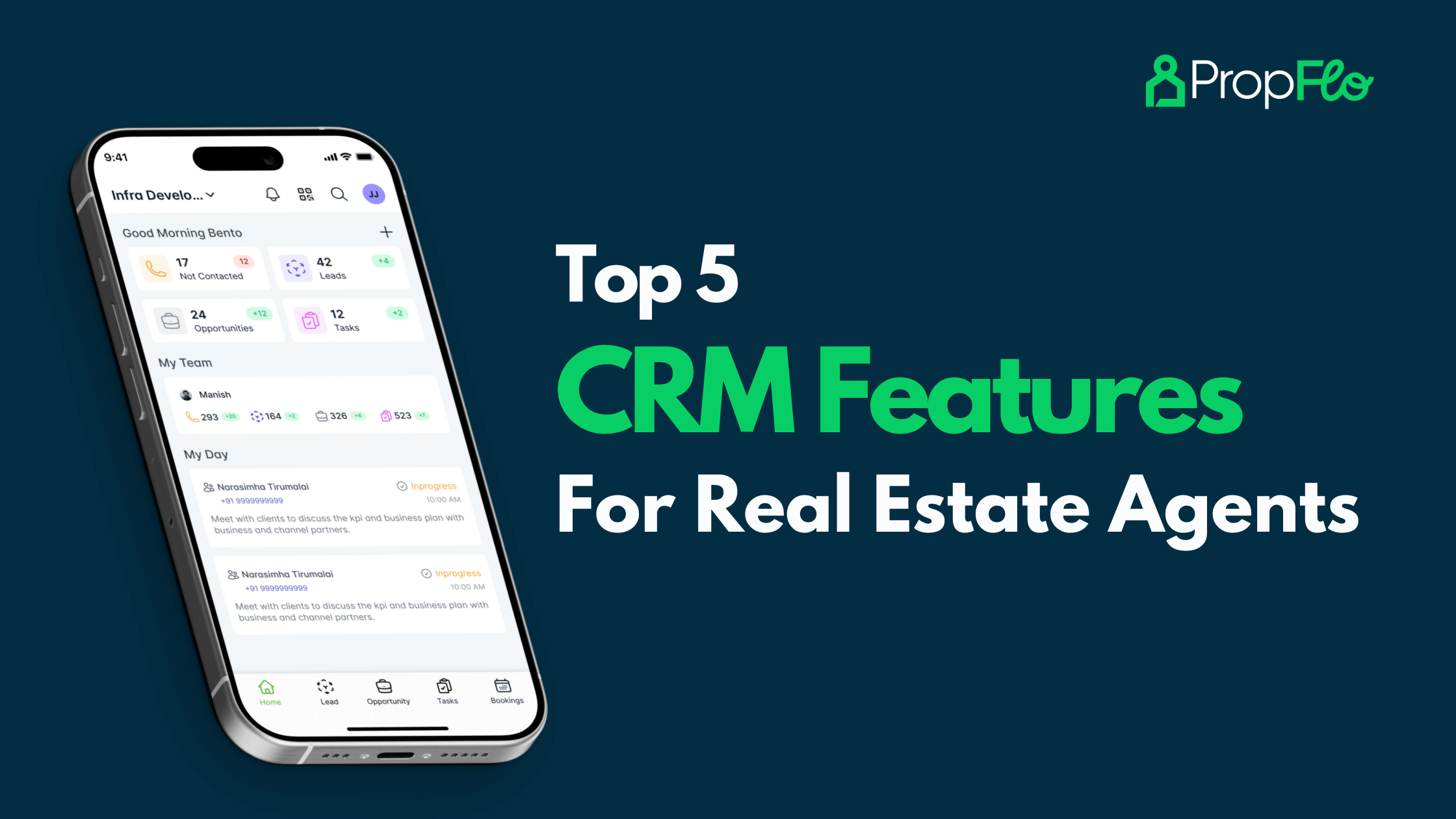
The real estate industry is undergoing a major transformation. What was once driven purely by personal networks and word-of-mouth has now become a digitally driven, data-powered domain. Buyers today do their homework, explore options online, and expect agents to provide fast, informed, and personalized service. In this high-pressure environment, the success of a real estate professional—especially a channel partner—depends on how efficiently they manage relationships, leads, and follow-ups.
This is where CRM (Customer Relationship Management) systems come in. More than just contact management tools, CRMs have become the operational backbone for channel partners who want to scale their business, improve client satisfaction, and close deals faster.
Who Are Real Estate Agents or Channel Partners?
A real estate agent or channel partner is basically a sales and marketing partner to property developers. They market projects, create buyer interest, show properties, and handle the transaction process on behalf of the developer. Channel partners are different from traditional brokers in that they tend to work with several projects from various developers and serve as the first point of contact for potential buyers.
They play a vital role in:
- Generating driving leads for new project launches.
- Facilitating buyers through the site visit and documentation process.
- Assisting developers in growing their sales network without having to recruit large in-house teams.
Having several projects, developers, and buyers to coordinate—organization, speed, and communication become mission-critical. And that's precisely what a CRM is designed to handle.
Why Do Agent and Channel Partners Need a CRM System?
For a channel partner, customization and timing are usually the success mantra. Missing a follow-up call, losing a lead, or forgetting to let a client know about a project can mean losing not just a sale but long-term credibility as well.
This is how a CRM can change your operations:
- Puts all lead sources in one place, preventing fragmented data on WhatsApp, emails, and spreadsheets.
- Arranges repetitive tasks, allowing you to focus on client interaction and property presentations.
- Monitors performance by project, enabling you to prioritize high-converting listings.
- Improves customer service, as agents can follow up with complete context, never having to ask, "Remind me which project you were looking at again?"
Whether you're an individual agent or running a team, a CRM enables you to work smarter—not harder.
Top 5 CRM Features Every Real Estate Agent Should Utilize
1. Lead Capture and Auto-Assignment
As a Real estate brokerage firm, Consider you have a 5+ member team and your firm receives leads through marketing and other channels - Facebook ads, Google forms, real estate property portals, landing pages, offline events, cold calling and more. If you already placed a crm system in your company that automatically captures and routes these leads and saves against lead leakage and response time delay. Auto-assignment rules also send leads to salespeople based on project expertise, location, or availability.
Why it matters:
-
No manual data entry or import/export headache.
-
Ensures every lead is automatically followed up by the right person.
-
Reduce response time, which has a direct impact on conversion rates.
For example, if your Facebook campaign is active for a newly launched high-end luxury property in the south region of a particular city, then CRM will automatically route the captured lead for this project to South region's assigned salesperson. For this, you need to set up a lead assignment rule beforehand.
2. Real-Time Alerts and Follow-Up Reminders
Following up at the right time can make or break a deal. A good CRM sends push notifications, email alerts, and mobile reminders so that agents never miss a beat. It also allows you to set up follow-up sequences for cold or inactive leads.
Why it matters:
-
Increase lead engagement via multiple customer touchpoints
-
Reduce the drop offs and increase the lead qualification ratio
-
Agents can streamline operations and automate tasks.
Example: If a lead doesn't respond in 48 hours after registering, then customer relationship management software will automatically schedule the follow-up and send the remainder to leads.
3. Marketing Automation
Leads don't convert overnight. They need to be nurtured—either by sending project brochures, price updates, or festive offers. CRM automation for brokers allows you to design and schedule campaigns via Email and WhatsApp from a single interface. It's good to have WhatsApp integrated or built in within CRM systems.
Why it matters:
-
Has regular communication with prospects.
-
Assists in reviving cold leads with the appropriate content at the appropriate time.
-
Enables mass outreach without sacrificing the personal touch.
Example: Plan a diwali campaign with offers of limited validity across multiple projects with automated follow-ups to leads who open the messages and enquire about your projects
4. Centralized Communication History
When you're dealing with dozens of prospective clients on several projects, it's simple to get confused about who said what. A call logging, message logging, email logging, and meeting logging in CRM provide you with a detailed timeline of all interactions. This is useful for individual agents as well as teams to keep track of each and every activity.
Why it matters:
-
Provides complete context in follow-ups.
-
Facilitates smoother handovers between members.
-
Establishes client trust with regular, well-informed communication.
Example: If any team member is on leave or absent, another member can pick up the lead without having to ask the client about past conversations and can directly take the conversations ahead. This is one of the benefits of using CRM, which plays an important role in a real estate company.
5. Performance Tracking and Analytics
By the end of the month, it's not the number of leads you created—it's the number that converted, which source converted best, and who created the most business. CRMs give you this transparency through dashboards and reports. Where you can get the business-level and project-level details and individual sales performance reports as well and save hours of data analysis work by using the real estate reporting and analysis feature in the crm.
Why it matters:
-
Helps in determining bottlenecks in your sales pipeline.
-
Allows you to target the most profitable marketing channels.
-
Gives you precise metrics to pass to developers or leadership teams.
Example: One of the advantages of getting unified view of crm reports is that you can analyze the sources, and, for example, If leads from an email are converting poorly while WhatsApp leads are performing better, you can reallocate budget instantly as you have prebuilt reports in front of you.
Conclusion:
For real estate agents and channel partners, time equals money. And the quicker you can connect, cultivate, and convert a lead, the more deals you'll close. A property sales CRM does the heavy lifting—managing your workflow, automating tedious tasks, and providing valuable insights that inform wiser decisions. As the real estate landscape becomes increasingly competitive and digital-first, having the appropriate CRM features is no longer a nice-to-have—it's a strategic imperative. Whether you want to seriously scale your real estate business, the above stated are the 5 best crm feature which every real estate agent should utilize, and you can easily find these features in PropFlo Real estate and grow your real estate business.