

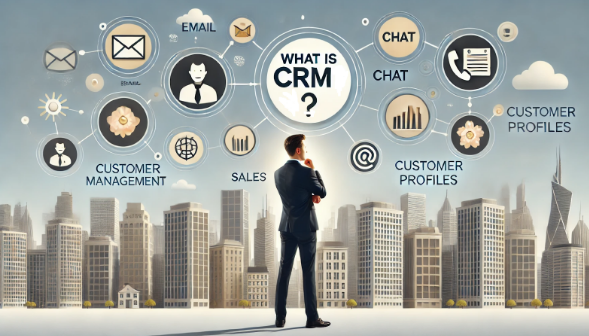
In today’s fast-paced business world, maintaining great customer relationships is critical, especially in the real estate sector with stiff competition and a lot of client interaction. That is where Customer Relationship Management (CRM) software fits in.
What is CRM Software?
CRM means Customer Relationship Management. Businesses use CRM software to manage their interactions with existing and potential customers. Through centralizing data, automating processes, and offering insights needed for growth as well as enhancing customer service; real estate companies can be able to streamline operations, enhance client engagement, boost sales, and make a profit.
Benefits of CRM Software
-
Better Lead Management: CRM software simplifies the process of adding, tracking, and managing leads in that Developers or agents in real estate should view each lead within the sales pipeline so that they can take appropriate actions to move them closer to a sale.
-
Increased Productivity and Sales: By automating routine tasks and organizing data, CRM systems free up time for agents to focus on selling. This boosts efficiency and increases the chances of closing more deals.
-
Enhanced Analytics: Sales performance, customer behaviors as well as market trends are some valuable insights provided by CRM software.
-
Centralized Data Access: Since all the client records are under one roof, an agent can easily pull up files containing the information that he or she requires. This helps in avoiding any loophole left free and make sure all the interactions with the customers are educated and relevant.
-
Cost Savings: The single source of information reminds companies of the fundamentals that concern successful revenue generation, minimizing time on paperwork and related expenses.
Major characteristics of the Real Estate CRM
-
Property Listing Management: Being able to easily organize and modify the property listings and make sure all data on these properties are accurate and up-to-date.
-
Data Centralization: Collect all the client, property, and transaction records at one single area that is easy to sort and search.
-
Reporting and Analytics: Produce complex reports as well as dashboarding for performance analytics and business process and operations analysis.
-
Lead and Pipeline Management: Monitor leads right from the time they are generated through the entire sales cycle and sale handling.
-
Task and Activity Tracking: Have a reminder of all the tasks that are to be done, meetings to attend, and follow-ups to make so that none of them is forgotten.
-
Integration with Third-Party Platforms: Integrate with other real estate marketplaces and networks to broaden the scope of coverage and enhance performance.
-
Marketing Automation: Send brochures and create e-mail advertisements from the CRM so that the customers receive this marketing from the CRM.
-
Scalability: Modify the CRM with the expansion of your business, tweaking it to include new functionalities and functions.
-
Unified Customer Profile: Essentially offer the customers a correct, integrated image of their purchase record, order information, and service requests.
-
AI Integration: Integrate AI to handle processes, analyze customers' behavior, and communicate effectively.
Wonder what's next?
Begin your Real Estate CRM journey with PropFlo
PropFlo CRM, perhaps the most popular CRM, is a powerful cloud-based Real Estate CRM designed to manage sales, marketing, and customer support in one place. With features such as Artificial Intelligence sales assistant, sales pipeline, marketing automation, analytics, and much more, PropFlo CRM makes it possible for all sizes of businesses to have perfect customer relations.To read more about this, you can visit PropFlo