

In today’s fast-moving business world, it's important to stay efficient. Increasing productivity is a key to producing very useful results. One of the most effective ways any company increases their productivity is through planning procedures with workflow automation. But what exactly does workflow automation mean, and can it benefit the business?
In this blog. Let’s dive into the concept of workflow automation, how it works, its benefits and why businesses should choose to adopt it.
What is workflow automation?
Workflow automation is the process of automating the business workflow's repetitive tasks, approvals, and processes using technology. It involves the implementation of software tools to automate the procedures that sequence the tasks. It reduces human effort and ensures consistency in execution.
Simply put, workflow automation is the process of developing a chain of activities or triggers that act automatically in accordance with pre-defined rules and require no manual intervention. From sending an email to document filing, approving papers, to ordering customer products, workflow automation can enumerate activities for several departments.
How Does Workflow Automation Work?
Workflow automation usually operates under a list of rules or triggers. Here's how it goes:
-
Define the workflow: It is a preliminary step that decides what the processes or activities to be automated. As an example, the sales group could automate sending a follow-up email after putting in a new lead into the system.
-
Create Rules and Triggers: CRM automation tools allow users to define specific rules that trigger actions. For instance, “When a new lead is added, send a welcome email to the customer.”
-
Automate Actions: Once rules are set, actions such as email sending, data entry, or document approval can happen automatically.
-
Monitor and Optimize: Automation software usually includes monitoring and reporting features so businesses can track performance and make improvements as needed.
Benefits of Workflow Automation
-
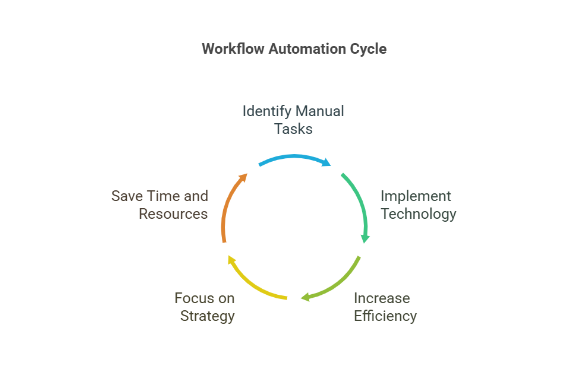
Increased Efficiency: One of the main benefits of workflow automation is the increase in efficiency. Automation of routine activities helps save valuable time and resources of each company, and staff can use the time saved on more value-based activities such as customer support, strategy, or creative tasks.
-
Less Errors: Automation avoids human mistakes from happening when things are done manually. Through workflow automation, activities such as data entry or document management are performed right every time with fewer chances of committing costly mistakes.
-
Improved Consistency: Automated processes ensure that the task is performed the same way every time, producing a uniform process across the company. This can enhance the customer experience, preserve quality control, and guarantee that business operations are smooth.
-
Cost Savings: By minimizing the need for human labor and making processes more efficient, companies are able to decrease their operational expenditure. Automated processes can eliminate the requirement for additional employees or minimize wastage of time on mundane tasks.
-
Rapid Decision Making: Automation also assists in speeding up decision-making through the instant delivery of information or approval to the right person. For example, if a document requires approval, an automated system can notify suitable decision-makers instantly and cut down on delay in the process.
-
Enhanced Collaboration: Automation of workflow makes the team work better together by making work more open and making sure the right people are informed at the right time. This brings the workplace together and provides a common understanding for everyone.
-
Scalability: As companies expand, workflow automation is more vital to handle the augmented workload. Scalable automated workflows are easily accommodated, and companies are able to complete masses of work without the need for additional staff.
How to Implement Workflow Automation in Real Estate
It does not have to be difficult to automate workflows. Below is how organizations can begin:
-
Identify Repetitive Tasks: Begin by finding out the tasks or processes that are repetitive and take a significant amount of time. Most of the repetitive tasks involve report writing, data entry, and approval of documents.
-
Choose the Right CRM Tool: There are numerous workflow automation tools available, varying from simple task automation platforms to complete business process automation software for real estate. Choose one that suits your business goals and is easy to integrate with your existing systems.
-
Build the Workflow: After selecting a tool, build your workflow. Define the rules, triggers, and actions that must be automated.
-
Test and Optimize: Test your automation workflows to confirm they're working properly and optimize them as needed. Periodically review performance and seek ways to optimize.
Conclusion
Automation of the work process is a critical business function for companies that require greater efficiency, fewer errors, and greater daily operations. Automating minor processes and procedures enables companies to free up valuable time for their workforce so they can develop higher-level, strategic, and customer-focusing functions. From lowering operational expenses to enhancing collaboration and decision-making, the advantages of workflow automation are apparent.
By choosing the best workflow automation platform like PropFlo CRM for real estate, companies not only increase their productivity but also position themselves for future growth. Whether you’re a small business or a large corporation, automating workflows can make a significant difference in your success.
Recommended: 6 Ways PropFlo Automation Offers a Competitive Edge in Sales and Marketing