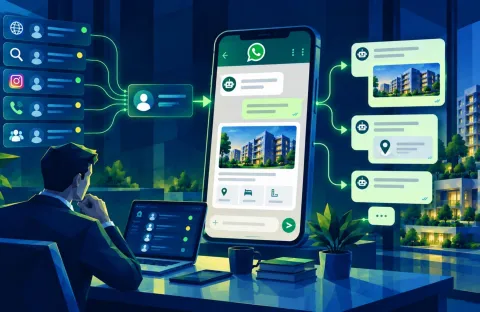


In a world where real estate buyers and investors expect fast, personalized, and multimedia-rich communication, WhatsApp has emerged as an indispensable channel. With over two billion users and features built for instant engagement, it's no wonder that WhatsApp Business for Real Estate is reshaping how agents, brokers, and developers connect with clients.
This blog explores How to Do WhatsApp Marketing for Real Estate, highlighting real-world use cases from lead nurturing to virtual tours and demonstrating the Benefits of Using WhatsApp for Real Estate. Whether you're curious about Use WhatsApp API to Boost Sales in Real Estates or want to know WhatsApp Marketing in Real Estate Lead Nurturing, this guide will equip you with actionable strategies and insights.
The Rise of WhatsApp in Real Estate Marketing
In recent years, WhatsApp has moved beyond being a personal messaging app into a serious business communication channel. For real estate professionals, this shift has been transformational. With over two billion users globally and open rates exceeding 95%, WhatsApp has become one of the most direct and effective ways to reach potential buyers and tenants.
Traditional real estate marketing strategies such as cold calling, email campaigns, and newspaper ads often struggle to capture attention. WhatsApp, however, meets customers where they already are—on their mobile phones. Instant responses, multimedia sharing (images, videos, floor plans, brochures), and conversational engagement make it a natural fit for property marketing.
From individual agents to large developers, businesses are embracing WhatsApp Business for Real Estate as a core part of their outreach. Whether it’s answering property inquiries instantly, sending project updates, or guiding buyers through the sales journey, WhatsApp is no longer a side tool; it’s fast becoming the frontline channel of communication.
Key Benefits of Using WhatsApp for Real Estate
Adopting WhatsApp as a marketing tool brings multiple advantages that traditional methods can’t match. Below are some of the top benefits of using WhatsApp for real estate:
1. Instant Communication with High Engagement
Unlike emails that may go unread, WhatsApp messages are typically opened within minutes. This ensures property listings, project updates, or event invites reach buyers almost instantly.
2. Multimedia-Rich Marketing
WhatsApp allows agents to share images, videos, PDF brochures, and even 3D walkthroughs. A potential buyer can receive a virtual property tour right on their phone, making it easier to evaluate options before scheduling a site visit.
3. Personalized, One-on-One Experience
Every conversation feels direct and tailored. Agents can answer questions, share relevant properties, and build trust—something bulk SMS or ads can’t achieve. This aligns with modern real estate marketing strategies that emphasize personalization.
4. Cost-Effective Lead Nurturing
With features like quick replies, broadcast lists, and WhatsApp groups, businesses can nurture hundreds of prospects at a fraction of traditional advertising costs. This is why many agents now rely on WhatsApp marketing for real estate leads to sustain engagement.
5. Always-On Accessibility
Real estate inquiries often happen outside office hours. WhatsApp provides 24/7 accessibility, especially when paired with automation or chatbots. Clients feel supported, and businesses reduce the risk of losing hot leads.
Top Use Cases: How WhatsApp Is Used in Real Estate
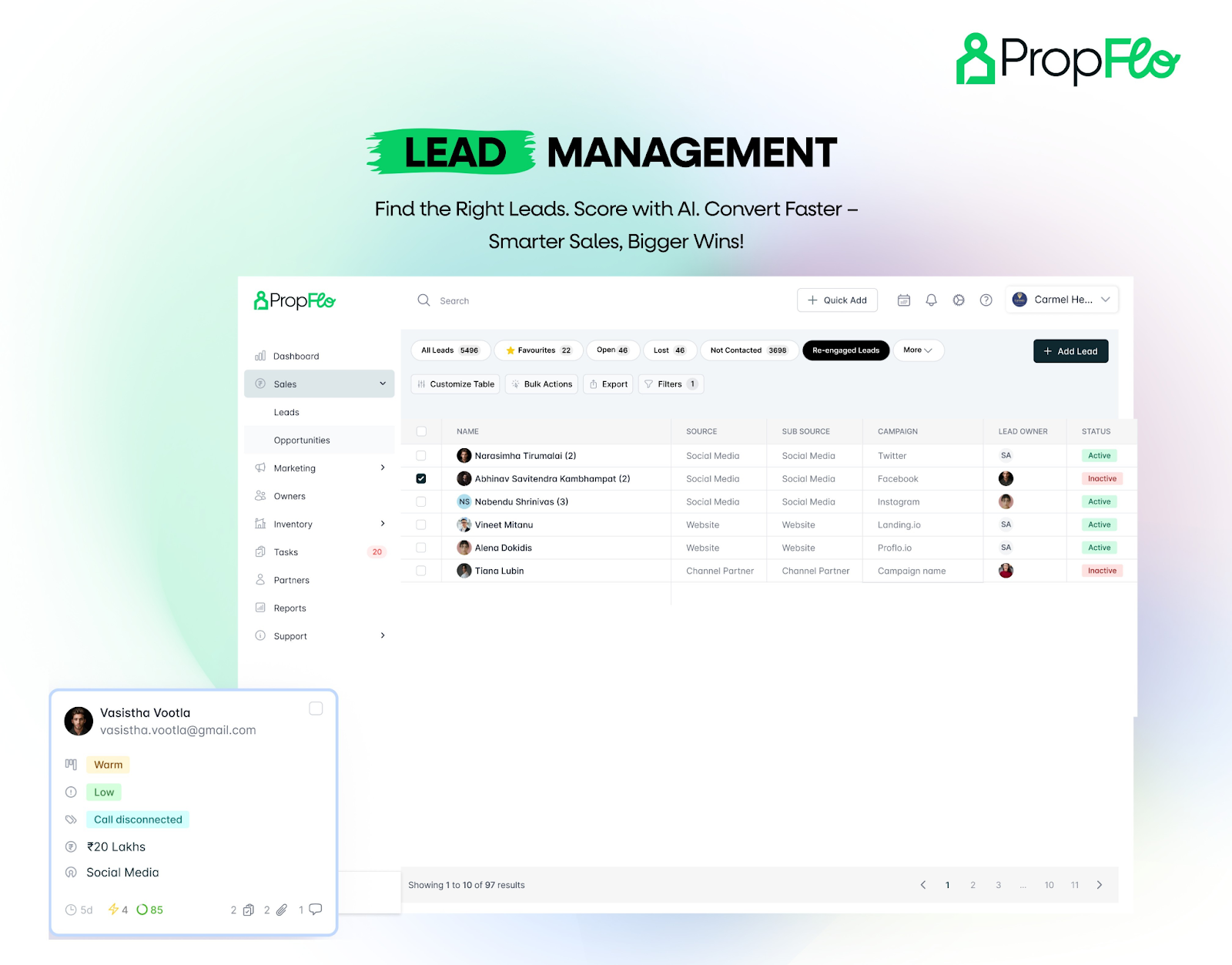
Real estate is one of the most relationship-driven industries in the world. Success depends on capturing inquiries quickly, building trust through constant communication, and guiding prospects seamlessly from interest to investment. This is exactly where WhatsApp shines. Its immediacy, multimedia capability, and conversational style make it the perfect channel for every stage of the property journey.
Below are the most powerful WhatsApp marketing use cases in real estate that illustrate how to do WhatsApp marketing for real estate effectively.
1. Instant Lead Capture & Qualification
In traditional marketing, leads generated from property portals, landing pages, or ads often get stuck in manual processes. Sales teams might take hours to call back, by which time buyers have already contacted competitors.
How WhatsApp solves this:
-
Integrating Click-to-WhatsApp buttons on ads or websites lets prospects start chatting instantly.
-
An agent or even better, a WhatsApp chatbot for real estate business marketing, can instantly greet the buyer, ask qualifying questions (budget, location preference, property type), and log responses into the CRM.
-
High-intent leads are routed to sales reps immediately, while lower-intent leads are added to nurturing campaigns.
Example workflow:
-
A buyer clicks on a Facebook ad for a new apartment project.
-
They’re redirected to WhatsApp where a bot asks: “What’s your preferred budget range?” and “Are you looking for 2BHK or 3BHK?”
-
Based on answers, the CRM automatically tags them as a “Hot Lead” and assigns them to the right agent.
Impact: Faster response times (within seconds, not hours) reduce lead leakage and significantly increase the chance of conversion.
2. Property Updates, Announcements & Broadcast Campaigns
Email open rates are declining, and SMS is limited to plain text. Both channels lack the personal touch needed to keep buyers engaged.
How WhatsApp solves this:
-
Using WhatsApp Business for Real Estate, agents can broadcast updates on new listings, price drops, and project milestones to segmented audiences.
-
Buyers receive property photos, PDFs, or even short videos directly in their WhatsApp chat, making the content more engaging and actionable.
-
For larger campaigns, companies can use WhatsApp API to boost sales in real estates by automating bulk yet personalized messages to hundreds of leads.
Example workflow:
-
A developer sends a broadcast to interested prospects: “Special launch price for 3BHK units – limited period. See brochure here.”
-
Recipients can reply directly to inquire further or schedule a site visit.
Impact: Buyers remain engaged, sales cycles are shortened, and marketing ROI improves compared to email/SMS.
3. Virtual Property Tours & Remote Showcasing
Many buyers (especially NRIs or those living in other cities) cannot physically visit properties during the early stages of research.
How WhatsApp solves this:
-
Agents share property walkthrough videos, 360° images, and even links to virtual tours directly via chat.
-
Buyers can explore multiple options before narrowing down choices for in-person visits.
-
Automated bots can even deliver different tour links based on the buyer’s stated budget or location preference.
Example workflow:
-
A lead from Dubai expresses interest in an apartment in Bangalore. The agent sends a short property tour video on WhatsApp along with the floor plan PDF.
-
The lead shortlists the property and requests a physical visit on their next trip.
Impact: Expands reach to global buyers, saves time for both agents and prospects, and accelerates decision-making.
4. Appointment Scheduling & Automated Reminders
Coordinating property visits is time-consuming and prone to no-shows. Missed appointments waste both agent and client time.
How WhatsApp solves this:
-
Buyers can book available time slots directly via WhatsApp, synced with the agent’s calendar.
-
Automated reminders are sent a day and an hour before the scheduled visit.
-
Clients can confirm, reschedule, or cancel without lengthy phone calls.
Example workflow:
-
A bot sends: “Would you like to visit our sample flat? Available slots: Saturday 11:30 AM, Sunday 4:00 PM.”
-
The buyer selects a slot, and the appointment is instantly confirmed and added to the agent’s calendar.
Impact: Reduced no-shows, better time management, and improved customer experience.
5. Document Sharing & Transaction Support
Sharing brochures, agreements, and verification documents over email is often slow, inconvenient, and easily overlooked.
How WhatsApp solves this:
-
Agents can send property brochures, pricing sheets, or agreement drafts as PDFs directly in chat.
-
Buyers can upload ID proofs, application forms, or scanned documents without leaving WhatsApp.
-
Secure, verified business accounts add trust to these exchanges.
Impact: Faster documentation, smoother progression from lead to buyer, and reduced friction in transactions.
6. 24/7 Support, FAQs & Lead Nurturing
Sales teams cannot be available around the clock, and many inquiries come after office hours.
How WhatsApp solves this:
-
WhatsApp marketing in real estate lead nurturing is powered by automation. Chatbots can answer FAQs (availability, EMI options, possession timelines) anytime.
-
Warm leads receive follow-ups, like “Have you considered booking your site visit this week?”
-
Agents can step in when high-intent queries are detected.
Impact: Prospects feel supported, response times stay minimal, and engagement continues even when teams are offline.
7. Post-Sales Engagement & Community Building
Many agents lose touch after a deal is closed, missing referral and upsell opportunities.
How WhatsApp solves this:
-
Developers create WhatsApp groups to keep buyers updated on construction milestones, possession dates, and handover processes.
-
Agents send payment reminders, registration alerts, or personalized thank-you notes.
-
Feedback and referral campaigns can be run seamlessly on WhatsApp.
Impact: Stronger client relationships, higher referral rates, and improved brand trust.
Want to Know WhatsApp vs SMS - which works better for Real Estate?
How to Use WhatsApp Chatbots for Real Estate Business Marketing
This section is your practical, end-to-end guide to WhatsApp chatbots for real estate business marketing—what to build, how to launch, and how to scale. You’ll see where chatbots fit inside modern real estate marketing strategies, how they supercharge WhatsApp marketing for real estate leads, and exactly how to use WhatsApp API to boost sales in real estates without losing the human touch.
A. What a WhatsApp Real Estate Chatbot Actually Does
A real estate WhatsApp bot is a conversational assistant that:
-
Responds in seconds to new inquiries (price, availability, floor plans, locality).
-
Qualifies prospects (budget, BHK, location, timeline) and pushes clean records to your CRM.
-
Recommends inventory with media (images, brochures, short videos, 3D tours).
-
Books site visits, sends reminders, and reschedules on request.
-
Hands off hot leads to an agent instantly with full chat context.
-
Automates post-sales updates (payment reminders, possession timelines, service tickets).
Put differently, it turns WhatsApp into a complete demand-to-deal pipeline central to How To Do WhatsApp Marketing For Real Estate at scale.
B. Pick Your Stack: Business App vs API (and Why It Matters)
-
WhatsApp Business App: Fast start for solo agents/small teams—labels, quick replies, catalogs. Limited automation and multi-agent handling.
-
WhatsApp Business Platform (API): For teams and developers. Enables approved message templates, multi-agent inboxes, advanced automation, integrations with CRM, calendars, and data systems. Choose API if you want serious WhatsApp marketing in real estate lead nurturing and portfolio-wide campaigns.
Rule of thumb: if you’re running paid campaigns, multiple projects, or 5+ agents, go API.
C. Choose Your Bot Style
Hybrid is what the best real estate chatbots to boost conversions use: rails for business-critical steps (consent, capture, booking), AI for open-ended Q&A.
D. Design High-Conversion Conversations (Fast Path + Deep Path)
Your conversation architecture should prioritize speed, then offer detail on demand.
Fast Path (≤ 30 seconds):
-
Greeting → 2) Budget + BHK + Locality → 3) Instant matches (cards + brochure) →
-
Micro-CTA: “Book a site visit?” → 5) Slot picker → 6) Confirmation + map + reminder opt-in.
Deep Path (optional):
-
Loan/EMI FAQs, neighborhood info, schools, commute.
-
Compare units, view floor plans, request callback “in 5 minutes”.
Copy principles
-
1–2 short lines at a time.
-
Quick-reply buttons wherever possible.
-
Always offer “Talk to an agent now”.
This is the core of How to Use WhatsApp Chatbots for Real Estate Business Marketing: remove friction, deliver value fast, then escalate the moment intent spikes.
E. Build the Knowledge Layer (So Answers Are Accurate)
Create and keep current, modular “answer blocks” the bot can use:
-
Project summaries, price bands, amenity lists, RERA & possession timelines.
-
Inventory snapshots (available units, typical sizes, view, parking).
-
Media: 15–60s walkthrough videos, brochures (PDF), floor plan images.
-
FAQs: booking amounts, payment schedules, documentation, loan partners.
Keep this content in a CMS/knowledge base the bot can query. It’s the difference between “nice chat” and benefits of using WhatsApp for real estate that move deals forward.
F. Wire the Integrations (Where Automation Meets Ops)
To transform conversations into revenue, connect:
-
CRM: create/update contacts, attach transcripts, tag intent (budget/BHK/location/timeline), set source=WhatsApp.
-
Calendar: show live visit slots; write confirmed bookings; auto-remind + reschedule.
-
Inventory: expose availability ranges or “typical units” by tower/stack.
-
Marketing automation: start nurture journeys when a lead cools; trigger re-engagement after 7/14 days.
-
Agent inbox: route hot handoffs with full context; enforce SLAs (e.g., call within 5 minutes).
This is how you use WhatsApp API to boost sales in real estates by making every reply actionable.
G. Create Compliant Entry Points & Templates
-
Entry points: Click-to-WhatsApp Ads, website button, QR on hoardings, links on portals, email signatures, Google Business Profile.
-
Opt-in & consent: get explicit permission before outbound marketing; store timestamp & channel.
-
Message templates (for API outbound beyond the 24-hour window):
-
“New launch updates”, “Visit reminder”, “Payment milestone”, “Thank-you + referral”.
-
Keep them service-oriented, concise, brand-safe, and personalized.
H. Sample Real-Estate Chat Flows
1) Lead Capture → Match → Book
-
“Hi! Looking for 2/3 BHK? What’s your budget & preferred area?”
-
“Here are 3 options under ₹80L in Whitefield. Want brochure or book a site visit?”
-
“Slots available Sat 11:30 / Sun 4:00. Pick one?”
2) Re-engage a Warm Lead
-
“Still exploring 2BHK near HSR? Two units just opened below your budget. Want to see photos or schedule a visit?”
3) Post-Sales
-
“Your milestone 2 payment is due next week. Would you like EMI options or speak to our finance advisor?”
These flows embody WhatsApp marketing for real estate leads and keep the funnel moving.
I. Multilingual, Regional, and NRI Support
-
Offer EN + Hindi + 1–2 regional languages where you sell.
-
Recognize Hinglish spellings (“2bhk”, “2 bhk”, “two bhk”).
-
For NRI buyers: time-zone considerate reminders; quick-link to virtual tour; agent callback window alignment.
J. Human Handoff & SLAs (The “Always Human” Escape Hatch)
Define clear triggers to alert agents:
-
High budget, immediate timeline (“buying this month”), repeat visit requests, frustration signals (“agent please”, “call me now”).
-
Send transcript + captured fields to the agent; confirm to the buyer: “Aditya will call you in 5 minutes.”
This preserves the personal touch within How To Do WhatsApp Marketing For Real Estate.
K. Metrics That Matter (Launch with a Live Dashboard)
Track these weekly:
-
Conversations started → contacts captured → qualified (hot/warm) → visits booked → show-ups → bookings.
-
Median reply time; % human handoffs within SLA; template CTRs; opt-outs.
-
Revenue view: cost per conversation, cost per visit, cost per booking.
If it moves these numbers, your chatbot is doing its job.
L. 30/60/90-Day Rollout Plan
-
Days 0–30: pick API provider, define flows (capture/match/visit), connect CRM & calendar, load knowledge base, soft-launch on 1–2 projects.
-
Days 31–60: add re-engagement journeys, multilingual, template outreach, paid Click-to-WhatsApp ads; publish dashboards.
-
Days 61–90: expand to post-sales, optimize replies (A/B test greetings, buttons, offers), scale across portfolio; set quarterly targets.
M. Common Pitfalls (and How to Avoid Them)
-
Over-chatting, under-doing: Great replies without CRM + calendar integration won’t move the needle. Integrate first.
-
No human door: Always expose “Talk to an advisor now.” Conversions live here.
-
Stale content: Outdated prices and inventory erode trust. Assign an owner to refresh weekly.
-
One-size messaging: Segment by budget, locality, and timeline; tailor templates.
-
Compliance misses: Secure opt-ins, respect quiet hours, store consent, and make opt-out easy.
Technical Setup: WhatsApp Business vs. WhatsApp API
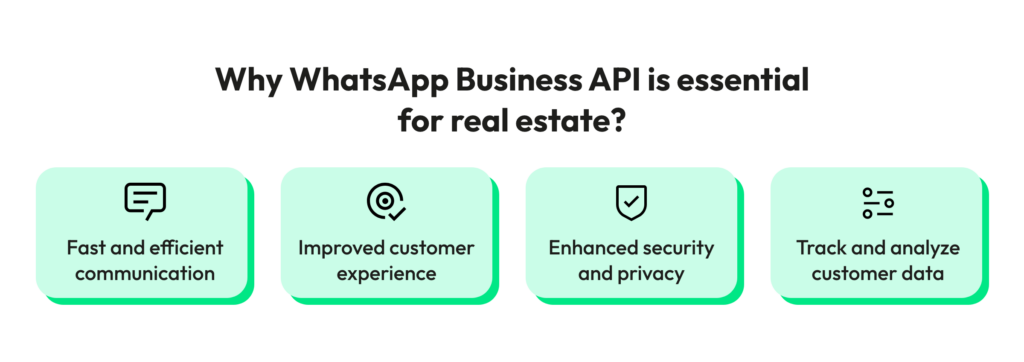
One of the most common questions real estate professionals face when planning their WhatsApp strategy is whether to use the WhatsApp Business App or the WhatsApp Business Platform (API). While both enable messaging with clients, they differ significantly in scale, features, and flexibility. Understanding these differences will help you decide which setup aligns with your real estate marketing strategies.
WhatsApp Business App
The WhatsApp Business App is designed for small teams and independent real estate agents. It’s free to use, easy to set up, and provides basic business features right inside the WhatsApp interface.
Key Features:
-
Business profile with address, website, and catalog of properties
-
Labels to organize chats (e.g., “New Lead,” “Follow-up,” “Closed”)
-
Quick replies and away messages
-
Broadcast messages (up to 256 contacts at a time)
-
Catalogs for showcasing properties
When to Use:
-
If you’re an individual agent or a small agency with a modest volume of leads
-
When you want to provide personalized, one-on-one support without complex automation
-
For showcasing listings, answering FAQs, and handling local client communication
Limitations:
-
Limited broadcast reach
-
Only one device/number per account (with web sync option)
-
No integration with CRMs or marketing automation systems
-
Not scalable for developers or large brokerages
WhatsApp Business API
The WhatsApp API (also known as the WhatsApp Business Platform) is designed for businesses that require handling higher volumes of leads, multiple agents, and automated workflows. It’s the backbone of advanced WhatsApp marketing in real estate lead nurturing strategies.
Key Features:
-
Multi-agent access: your whole sales team can use one number
-
Integration with CRMs, calendars, and marketing platforms
-
Approved message templates for proactive outreach (e.g., visit reminders, payment updates)
-
Unlimited broadcast campaigns via opt-in lists
-
AI-powered chatbots for lead capture, qualification, and FAQs
-
Real-time analytics and dashboards
When to Use:
-
If you’re a property developer or a large agency with hundreds or thousands of monthly leads
-
If you want to use WhatsApp API to boost sales in real estates through automation and campaigns
-
When you need seamless integration with your tech stack (CRM, marketing automation, ticketing)
Limitations:
-
Requires setup through an official provider (Business Solution Provider or BSP)
-
Costs may include per-message charges, depending on templates and country
-
Needs technical setup and ongoing management
Quick Comparison: App vs. API
Which One Should You Choose?
-
If you’re a solo agent or boutique agency → Start with the WhatsApp Business App. It’s free, simple, and gives you a professional edge over using personal WhatsApp.
-
If you’re a developer, large brokerage, or scaling agency → Go for the WhatsApp Business API. It unlocks automation, integrations, and bulk messaging—making it essential for advanced WhatsApp marketing for real estate leads.
Lead Nurturing & Conversion via WhatsApp
Capturing a lead is only the first step in real estate sales. The real challenge lies in nurturing that interest, building trust, and converting inquiries into site visits and ultimately closed deals. This is where WhatsApp truly excels. With its immediacy, personalization, and automation, it has become one of the most effective tools for WhatsApp marketing in real estate lead nurturing.
A. Building Immediate Engagement After Inquiry
The golden rule in sales is: respond fast or lose the lead. Research shows that responding within 5 minutes increases conversion chances drastically. WhatsApp ensures this happens automatically.
-
A prospect fills out a form on a property portal.
-
Instantly, a WhatsApp chatbot for real estate business marketing sends a welcome message:
“Hi , thanks for showing interest in our 2BHK units in Whitefield. Would you like to see the brochure or book a quick site visit?” -
This instant response creates a strong first impression, while capturing key details.
B. Structured Follow-Ups & Personalization
Not every buyer is ready to book immediately. WhatsApp enables structured nurturing through personalized messages that keep leads warm until they’re ready.
-
Day 1: Share the property brochure and images.
-
Day 3: Send a short walkthrough video or link to a virtual tour.
-
Day 5: Invite them to an exclusive on-site event or offer.
-
Day 7: A reminder: “Only 3 units left in this price range. Want to schedule your visit?”
This drip-style follow-up is a prime example of WhatsApp marketing for real estate leads, ensuring continuous engagement without feeling pushy.
C. Converting to Site Visits
The site visit is one of the most critical milestones in the real estate funnel. WhatsApp makes scheduling and reminders effortless.
-
Buyers can confirm slots directly through chat.
-
Automated reminders are sent a day before and an hour before the visit.
-
Maps and directions can be shared instantly within the same chat.
This reduces no-shows significantly and moves prospects further down the funnel.
D. Handling Objections & Building Trust
Many buyers drop off because of unanswered questions, such as EMI options, possession timelines, or legal documentation. With WhatsApp Business for Real Estate, these objections can be resolved quickly.
-
Chatbots can answer standard queries (e.g., “Is this project RERA approved?”).
-
Agents can jump in when complex negotiations arise.
-
This balance of automation + human touch ensures confidence at every step.
E. Post-Sales Relationship Building
Nurturing doesn’t stop at the sale. Happy clients bring referrals and repeat business.
-
Use WhatsApp groups to share construction updates with booked buyers.
-
Send payment reminders and milestone updates via approved templates through the WhatsApp API to boost sales in real estates.
-
Request testimonials or referrals in a friendly, non-intrusive way.
This creates long-term engagement, not just one-off transactions.
Best Practices & Compliance
While WhatsApp offers immense potential for real estate marketing, using it effectively requires a balance of personalization, professionalism, and compliance. Misusing the platform can lead to frustrated prospects or even getting your business account blocked. Below are the best practices that ensure your WhatsApp marketing for real estate leads is impactful, ethical, and sustainable.
Get Explicit Consent Before Messaging
WhatsApp is a personal space for most users. Sending unsolicited messages is not only intrusive but also risks damaging your reputation.
-
Use opt-in forms on your website, landing pages, or ads to collect permissions.
-
At offline events (property expos, site visits), ask clients if they’d like updates via WhatsApp.
-
Store proof of consent to remain compliant with WhatsApp’s business messaging policies.
Consent is the foundation of how to do WhatsApp marketing for real estate responsibly.
Balance Automation with Human Touch
While WhatsApp chatbots for real estate business marketing are powerful for instant replies and FAQs, they should not replace real conversations.
-
Use bots for lead capture, qualification, and standard queries.
-
Escalate to human agents quickly when high-intent signals appear (e.g., “I want to book a visit”).
-
Always provide an easy “Talk to an agent now” option.
This hybrid model ensures efficiency without losing the personal connection real estate buyers expect.
Avoid Spam & Over-Messaging
Sending too many updates can irritate prospects and lead to opt-outs.
-
Segment your audience (by budget, location, timeline) and send only relevant updates.
-
Stick to a reasonable frequency—1–2 meaningful messages a week is usually enough.
-
Avoid generic blast campaigns; instead, personalize messages using CRM and WhatsApp API to boost sales in real estates.
Quality beats quantity: each message should add value.
Use Professional Branding
Your WhatsApp Business profile is an extension of your brand.
-
Set up a comprehensive business profile that includes your logo, contact details, website, and property catalog.
-
Use professional, concise language in messages. Emojis are fine for friendliness, but avoid being too casual.
-
Include multimedia (photos, videos, PDFs) to make conversations engaging and professional.
A polished profile builds trust and reinforces credibility in your real estate marketing strategies.
Comply with WhatsApp Policies & Data Privacy
WhatsApp enforces strict rules around business usage. Violations can result in account suspension.
-
Use only approved message templates for outbound communication beyond the 24-hour window.
-
Don’t buy or use third-party databases for messaging.
-
Respect local data protection regulations (GDPR, India’s DPDP Act, etc.).
Compliance is not optional: it’s what protects your long-term ability to use WhatsApp as a marketing channel.
Track & Optimize Performance
The best WhatsApp strategies are data-driven.
-
Measure open rates, response rates, and conversion rates for campaigns.
-
Test different message formats—short text vs. media-rich updates.
-
Use insights to refine and personalize your WhatsApp marketing in real estate lead nurturing efforts.
Continuous optimization ensures better ROI and sustainable growth.
Conclusion
The way real estate buyers and investors engage with businesses has changed forever. Speed, personalization, and convenience are no longer “nice-to-have”—they’re expected. And WhatsApp, with its unmatched reach and engagement rates, has proven to be one of the most powerful channels for fulfilling these expectations.
From WhatsApp marketing in real estate lead nurturing to broadcasting property updates, booking site visits, sharing documents, and even post-sales support, the platform covers the full buyer journey. When paired with automation such as how to use WhatsApp chatbots for real estate business marketing and scaled with the WhatsApp API to boost sales in real estates, it becomes more than a communication tool: it becomes a growth engine.
The benefits of using WhatsApp for real estate are clear: faster lead response, higher engagement, reduced no-shows, and stronger customer relationships. For agents, it means spending less time on repetitive tasks and more time closing deals. For developers, it means faster inventory turnover and better ROI. For customers, it means a seamless and personalized experience from the first inquiry to move-in day.
Contact Propflo today for a personalized demo and learn how to set up the best WhatsApp marketing for real estate leads from chatbot integration to API-powered campaigns tailored to your business goals.
Let WhatsApp become the channel that doesn’t just connect you to your customers, but helps you convert interest into sales, and sales into long-term trust.