

Zoning Laws and Building Codes
In the real estate industry, zoning laws and building codes play a crucial role in shaping the cities, ensuring safety, and maintaining a balance between residential, commercial, and industrial spaces. Whether an investor, developer, or homebuyer, understanding these regulations is essential for making many informed decisions.
What are zoning laws?
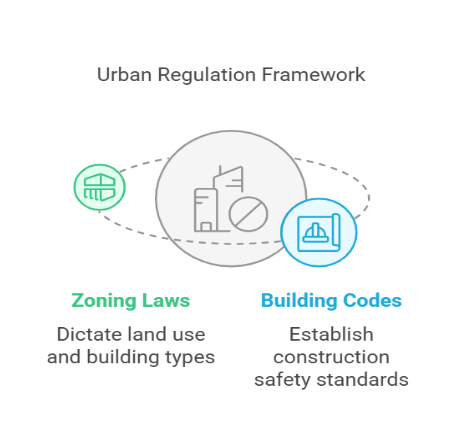
Zoning laws are laws used to regulate how land can be used in specific areas of a city or town. These laws are specifically designed to promote urban development, prevent overcrowding, and maintain property values.
Common zoning categories
-
Residential (R) - includes single-family homes, apartments, and townhouses.
-
Commercial (C) - Covers retail shops, offices, and business centers.
-
Industrial (I) - Includes warehouses, factories, and manufacturing units.
-
Agricultural (A) - Reserved for farming and agricultural activities.
-
Mixed-Use (MU) - Allows a combination of residential, commercial and recreational spaces.
Key Aspects of Zoning Laws
-
Land Use Restrictions: defines what type of building can be constructed.
-
Height Limits: controls the number of floors for a building.
-
Setback requirements: the distance of the building from the road.
-
Parking Regulations: specifies the number of parking spots needed.
What are building codes?
Building codes are safety regulations that govern the design, construction and maintenance of buildings. They ensure the structure of buildings is safe for occupants or not. And if they would withstand a natural disaster.
Key Elements of Building Codes
-
Fire safety: uses fire-resistent materials, exits and sprinkler systems.
-
Electrical standards: sets safety guidelines for wiring.
-
Structural integrity: ensures the building''s safety from external forces.
-
Environmental standards: checks whether eco-friendly construction or not.
How these Laws Impact Real Estate Development
-
Knowing zoning laws helps determine where you can build or expand your property for homebuyers.
-
Understanding the zoning laws helps in choosing the right location for either commercial or residential.
-
For developers, compliance with building codes ensures project approval and successful construction.
Zoning laws and building codes are crucial in shaping the future of real estate. They promote safety and sustainability. Whether you are planning to buy, build or invest, staying informed about these rules can save you from costly mistakes.
For real estate developers, if you are planning to launch a property and confused about choosing the right location? Read about Emerging Real Estate Hotspots in Hyderabad.
It is important that the right planning and execution is done when a new project is launched. While following the zoning laws and building codes, to operate the entire lifecycle of property management, it is essential to use customer lifecycle management software.