


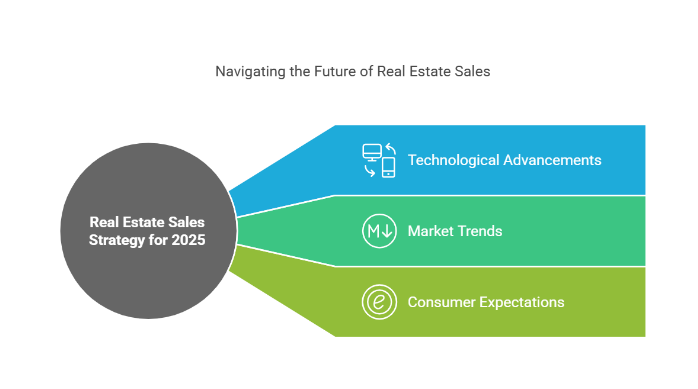
The real estate industry never stands still, so 2025 is definitely not going to be an exception. Changes in technologies, changes in market trends, and evolving consumer expectations guarantee that real estate sales strategies change continuously with time to keep pace. This blog discusses the key strategies of real estate sales in 2025 and is sure to be a comprehensive guide for real estate developers and brokers looking to navigate this exciting landscape.
1. Adopt Technology and AI for More Efficiency
Technology will play a key role in real estate in 2025. More AI will be integrated into CRM systems, where real estate developers can automate tasks, analyze customer data, and predict market trends. Tools with AI power can identify leads that are highly likely to be successful, follow up on these leads, and even give specific property recommendations to clients based on their behavior.
By embracing these tools, real estate professionals can cut time, increase communication, and make data-driven decisions. All the features, ranging from voice assistants and virtual tours to integrated financial calculators, will feature in real estate CRMs in order to supply the real estate builders and agents with everything they would require in one package.
2. Customized Customer Experience
Consumers in 2025 will expect very personalized services. Generic listings are a thing of the past, and so are impersonal interactions. Real estate developers would need to use data from their CRM systems and other platforms to understand every client's tastes, budget, and lifestyle.
The offering of personalized property suggestions, customized marketing initiatives, and open communication is going to drive the real estate developers to establish closer bonds with the clients. Personalized service is going to be a true differentiator in a competitive marketplace, whether it is a home buyer or a high-end property investor.
3. Implement Virtual and Augmented Reality
With the rising demand for distant and immersive experiences, real estate professionals will require the use of virtual reality and augmented reality technologies. Virtual and Augmented Reality in 2025: The potential buyer will be able to virtually view properties from around the world; therefore, face-to-face visits might not be that necessary, particularly for out-of-town buyers.
Incorporation of these technologies into your sales strategy will bring the property within a wider scope and make the process of property searching more engaging. This technology may also enable a buyer to have an idea of how a certain property might look with renovations or different design elements, thus creating better possibilities.
4. Leverage Social Media and Content Marketing
Social media platforms will remain at the core of a successful real estate sales strategy in 2025. The distinction will be that such content is not an advertisement but authentic, engaging material that draws a following. Real estate developers could share tips that are helpful to their audience, walk them through properties, or offer advice based on their experience.
Video marketing will also be essential as Instagram, YouTube, and Facebook become more popular. Through high-quality videos, real estate agents can present properties in an interesting way, which will help them connect with the potential buyer on a deeper level.
5. Leverage Client Relationships through CRM Technology
By 2025, a strong CRM will be in place to maintain the client relationship because customer expectations are going through the roof. Consistent communication and timely information at the right moment will make all the difference in closing the deal. The real estate CRM will be capable of having advanced features such as automated follow-up, personalized property alerts, and predictive analytics that helps Real Estate Developers understand their clients' needs.
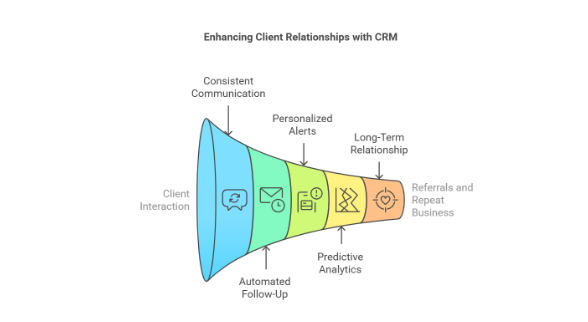
Beyond lead tracking, CRMs will also enable the Real Estate Developers to care for long-term relationships with their former clients so that they might encourage referrals and repeat business. Personalized emails, reminders, and offers would make the client feel valued and supported throughout the property journey.
6. Focus on Sustainability and Eco-Friendly Homes
Real Estate Developers should have a fair knowledge of features of green, eco-friendly properties and energy-efficient homes. Buyers in 2025 will value green certifications in the homes, energy-efficient appliances, and sustainable building materials.
With this type of knowledge of the latest developments in sustainable houses and understanding that these features come with value in the eyes of the buyer, Real Estate Developers can cater to a growing need for green, environmentally friendly houses. Marketing them as properties benefitting from green features will, therefore, interest the environmentally savvy buyer and bring a competitive difference.
7. Adapt to Shifting Market Conditions
The real estate market in 2025 will present new challenges that include interest rates, housing shortages, and shifts in demographics. Real estate Real Estate Developers need to be up to date on market trends and ready to change strategies according to these fluctuations.
For instance, when there is a trend towards affordable housing or the demand for rental housing increases, Real Estate Developers have to change their marketing strategies and inventory. The ability to be flexible along with a high understanding of the dynamics of the market will be critical to sustaining success in 2025.
8. Use Data-Driven Insights
Data analytics will continue to be an effective tool for real estate professionals in 2025, allowing Real Estate Developers to examine market trends, customer behavior, and sales performance to enhance decision-making about the kind of focus areas to emphasize.
For example, in today's business world, Realtors would be able to use data to understand which neighborhoods are increasing in demand. Predictive analytics would further enable the agent to anticipate the client's needs and then follow up at the right time and maximize the chances of closing a deal.
Conclusion
The real estate industry in 2025 will be characterized by the latest technological developments, changes in consumer expectations, and conditions in the market. To compete, real estate professionals must use new and business-specific real estate softwares CRM tools, adjust their strategies, and work on building close, personalized relationships with clients. Leverage AI, VR, social media, and data-driven insights, and real estate developers will be all set for the next years.
In such a fast-moving world, only innovators and well-informed and client-centric persons will find success in the field of real estate sales by the end of 2025.
You can also read our new blog on the real estate market in India: share and size analysis 2025.